
Targeting a single brain network doubles Parkinson’s symptom relief without surgery, challenging decades of medical dogma.
Story Snapshot
- The international team identifies somato-cognitive action network (SCAN) as Parkinson’s core driver, linking motor, cognitive, and non-motor symptoms.
- Brain scans from 800+ participants reveal SCAN hyperconnectivity to subcortex, explaining broad dysfunction.
- Transcranial magnetic stimulation (TMS) on SCAN achieves 56% response rate, over twice that of controls.
- Shifts paradigm from basal ganglia focus to network-based treatments, enabling earlier non-invasive therapies.
SCAN Discovery Redefines Parkinson’s Origins
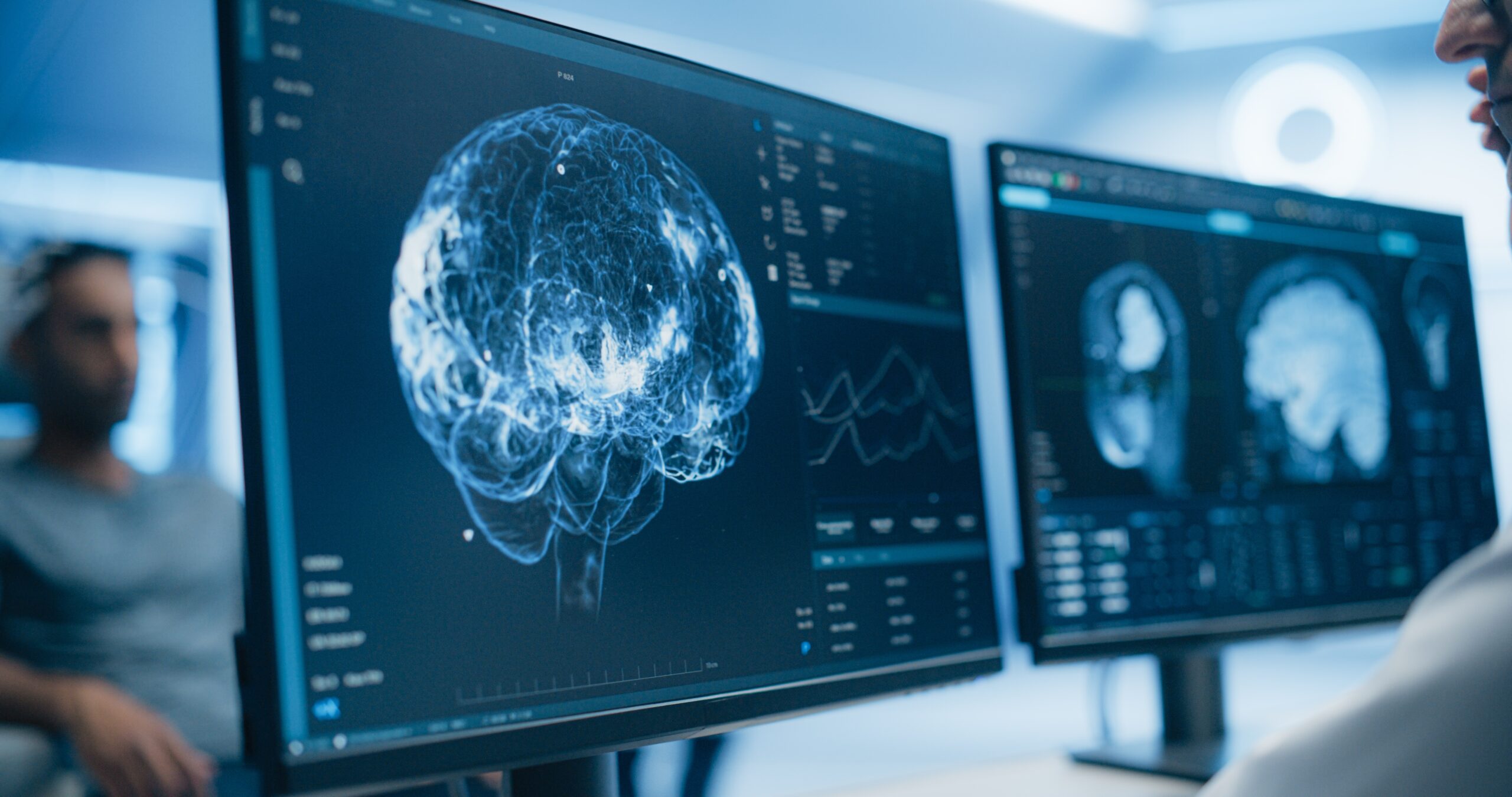
Nico U. Dosenbach described SCAN in 2023 Nature paper. This motor cortex network translates action plans into movement and monitors execution. Parkinson’s disease hyperconnects SCAN to subcortex regions handling emotion, memory, and basic motor control. Researchers analyzed MRI data from over 800 participants across therapies like deep brain stimulation, TMS, focused ultrasound, and medications. Excessive links disrupt digestion, motivation, cognition, and tremors. This explains why dopamine drugs fail non-motor symptoms.
Clinical Trial Proves SCAN Targeting Efficacy
Early 2026 trial treated 18 Parkinson’s patients with precision TMS aimed at SCAN. Patients showed 56% symptom improvement versus 22% in controls targeting nearby areas. Millimeter-accurate non-invasive stimulation normalized hyperconnectivity. Hesheng Liu from China’s Changping Laboratory led the analysis, declaring Parkinson’s a broader network disorder beyond basal ganglia. Dosenbach from Washington University called for precise targeting to treat and potentially slow progression. Results published February 4, 2026, in Nature.
Watch;
Key Researchers Drive Paradigm Shift
Hesheng Liu, senior author at Changping Laboratory, emphasized SCAN’s role over traditional basal ganglia models. Nico U. Dosenbach, SCAN discoverer and Turing Medical co-founder, pushes personalized neuromodulation. Their US-China collaboration pooled data from multiple centers. Dosenbach plans gait trials using electrode strips and ultrasound. This team bridges discovery to commercialization, aligning with conservative values of practical, innovative solutions over endless drug dependency. Facts support their shift from outdated dopamine fixation.
Parkinson’s, first detailed by James Parkinson in 1817, centered on basal ganglia dopamine loss since the 1950s. Recent network views expanded scope. A 2023 EEG study on early mild cognitive impairment showed slowed subnetwork evolution in alpha bands, reducing temporal-parietal-occipital interactions. SCAN integrates these insights, tying action monitoring to non-motor woes like sleep and apathy.
Scientists may have found the brain network behind Parkinson’s https://t.co/oQB1qCP1u8 biotech pharma pic.twitter.com/zG3zaXQZ5g
— LifeScienceZone (@LifeScienceZon1) February 9, 2026
Implications Reshape Treatment Landscape
Short-term, SCAN TMS offers earlier intervention than invasive deep brain stimulation, cutting costs and risks. Long-term, normalizing circuits may slow progression; upcoming trials target gait and cognition. Over 10 million global patients gain hope for precise therapies relieving family burdens. Economically, startups like Turing Medical boost medtech. Socially, it tackles hidden symptoms. Industry pivots to network precision medicine, challenging pharmaceutical dopamine dominance with common-sense tech advances.
Sources:
Scientists may have found the brain network behind Parkinson’s
2023 EEG study on early PD mild cognitive impairment
Scientists say this brain network may explain range of Parkinson’s symptoms
Scientists May Have Found the True Source of Parkinson’s Disease