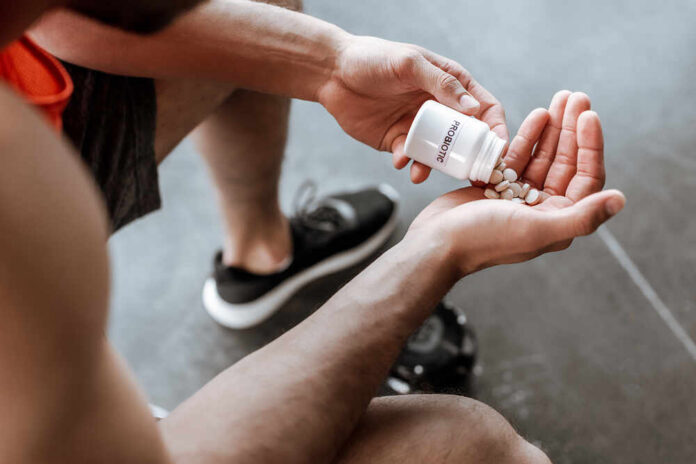
Millions of teenage boys are scooping creatine into their shakes every morning, and most of their parents have no idea whether that is a smart training edge or a quiet experiment on a still-developing body.
Story Snapshot
- Creatine is the most popular performance supplement among teen boys, yet no long-term safety studies have been conducted specifically on adolescents.
- The American Academy of Pediatrics and the American College of Sports Medicine both advise against routine creatine use under age 18 due to insufficient evidence.
- Any child of any age can walk into a store and buy creatine without a parent’s consent or knowledge — there are zero legal restrictions on its sale.
- A peer-reviewed review concludes supervised use at standard doses may be acceptable for serious adolescent athletes, creating real tension with the blanket “not recommended” guidance.
The Supplement That Needs No Permission Slip
Creatine sits on the shelf next to protein powder and energy drinks, completely unrestricted by law. No age gate, no parental consent form, no pharmacist consultation required. [2] That accessibility matters because teenage boys are among the heaviest users of the supplement, drawn by social media fitness culture, locker-room word-of-mouth, and the very real promise that creatine genuinely does work — at least in adults. The question that nobody has fully answered yet is what it does inside a body that is still growing.
Creatine is not a fringe compound. Your body produces it naturally, and it is found in red meat and fish. In adults, decades of research confirm it is likely safe at recommended doses for up to five years. [11] The problem is that adult safety data cannot simply be transplanted onto a 15-year-old. Adolescent physiology is different in ways that matter: hormones are surging, bones are still lengthening, and the kidneys are processing everything a growing body throws at them. Science has not caught up to the supplement aisle.
What the Research Actually Says About Teen Use
A 2018 systematic review published in Frontiers in Nutrition found no studies that directly examined creatine safety in an adolescent or youth population. [5] That is not the same as saying creatine harms teenagers. It means researchers simply do not know with confidence. The adolescent efficacy studies that do exist did not report clinically meaningful side effects, but the absence of a rigorous safety trial is precisely why major pediatric organizations default to caution. When the data gap is this wide, “probably fine” is not a satisfying answer for a parent.
A later review published in the National Institutes of Health’s PubMed Central reached a more nuanced conclusion. It states that creatine monohydrate supplementation in children and adolescent athletes is acceptable when proper precautions and supervision are in place, and when athletes do not exceed recommended dosages. [6] That conditional green light is meaningful, but the conditions attached to it are doing enormous work. Supervised, serious, competitive adolescent athletes operating under medical guidance are a very different population from the average 14-year-old mixing pre-workout in his bedroom.
Why Pediatric Organizations Are Drawing a Hard Line
The American Academy of Pediatrics and the American College of Sports Medicine do not recommend creatine use under age 18, citing insufficient evidence on long-term developmental effects. [1] The American Academy of Orthopaedic Surgeons takes it further, stating that children and adolescents younger than 18 should never take creatine supplements because of unknown risks. [12] That language — “never” — is unusually strong for a medical organization. It reflects genuine institutional concern, not reflexive overprotection.
There is also a contamination problem that rarely enters the dinner-table conversation. Creatine is frequently found inside muscle gainer and pre-workout blends, and those products carry a meaningfully higher risk of contamination by substances that are not listed on the label. [7] A teenager buying a tub of “creatine” from a discount supplement site may not be getting pure creatine monohydrate. The supplement industry is not regulated the way pharmaceuticals are, and that gap hits hardest when the consumer is young and the body is still developing.
What Parents Should Actually Do With This Information
The honest answer is that the science does not yet support routine creatine use in teenagers, and the institutional guidance reflects that gap, not a moral panic. For the rare elite adolescent athlete training under direct medical and nutritional supervision, a supervised conversation with a sports medicine physician about short-term, standard-dose creatine monohydrate is reasonable. [6] For everyone else — the recreational weight-room kid chasing bigger arms before summer — the evidence simply does not justify the experiment. Protein, sleep, structured training, and consistent nutrition remain the proven, zero-risk performance stack for teenagers, and no supplement closes the gap that those fundamentals leave open. [3]
Sources:
[1] Web – Parents Are Giving Their Kids Creatine. Experts Have Concerns.
[2] Web – Why So Many Teenage Boys Are Taking Creatine – Men’s Health
[3] Web – Should I let my teen use creatine? – Orlando Health Arnold Palmer …
[5] YouTube – Is Creatine Safe for Teens? A Pediatrician’s Take on Supplements.
[6] Web – Safety of Creatine Supplementation in Active Adolescents and Youth
[7] Web – Creatine Supplementation in Children and Adolescents – PMC
[11] Web – Creatine Supplements and the Youth Athlete – Pediatrics Nationwide
[12] Web – Creatine – Mayo Clinic