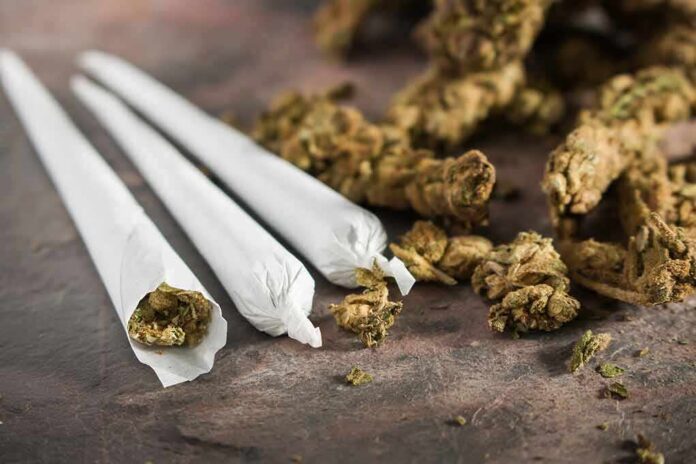
Smoking or eating marijuana just a few days a month was tied to 40% higher odds of having had a stroke, according to new research presented to the nation’s top heart doctors.
Story Snapshot
- A study of nearly 443,000 U.S. adults found low-frequency cannabis use linked to 40% higher odds of reported stroke.
- Researchers from Tulane University presented the findings at the American Heart Association Scientific Sessions 2026.
- Heavy users showed a smaller increase, 25% higher odds, than occasional users did.
- The American Heart Association already names cannabis as a possible trigger for stroke-related blood vessel problems.
A Massive Survey Finds A Surprising Pattern
Researcher Aabha Divya and her team at Tulane University pulled data from almost 443,000 American adults. People who said they used cannabis one to five days a month had 40% higher odds of reporting a previous stroke than people who did not use it at all. The team presented these results at the American Heart Association’s Scientific Sessions 2026, a major gathering of cardiovascular researchers and doctors.
Scientists adjusted their numbers to account for other known stroke risks. They factored in smoking, age, sex, race, body weight, diabetes, drinking, education, and exercise habits. Even after stripping out those factors, the link between occasional cannabis use and stroke history stayed strong, according to the American Heart Association’s own report on the findings.
Why Pot Might Hit The Brain’s Blood Vessels
Doctors have long suspected cannabis affects blood flow to the brain. The American Heart Association’s scientific statement explains that cannabis can trigger something called reversible cerebral vasoconstriction syndrome. That is a fancy way of saying blood vessels in the brain suddenly tighten up, cutting off normal blood flow. That tightening can set the stage for a stroke, especially in people who already carry other risk factors like high blood pressure.
This is not the first study pointing in this direction. An earlier Journal of the American Heart Association analysis of cannabis users found people who used it in the past 30 days had 42% higher adjusted odds of stroke, a number close to the new occasional-use finding. Earlier population studies cited by the American Heart Association found even larger risk jumps, including one analysis showing a more than threefold increase in stroke risk among certain cannabis users.
The Puzzle Of Why Occasional Use Looked Worse
Here is where the story gets strange. Heavy cannabis users in the new study showed only a 25% jump in stroke odds, lower than the 40% seen in occasional users. That is not how most health risks usually work. Normally, more exposure to something harmful means a bigger risk, not a smaller one. The AHA’s own reporting acknowledges this unusual pattern without fully explaining it.
Scientists studying drugs and disease have run into this same kind of twist before. A broader meta-analysis of cannabis and stroke research found a pooled odds ratio around 1.37, but noted the numbers varied widely across different studies and populations. Different ways of counting “use,” different age groups, and different stroke types all seem to shuffle the results. That variation is a signal that more digging is needed before anyone nails down an exact number.
What The Study Can And Cannot Prove
This is a cross-sectional study. That means researchers looked at a single snapshot in time, asking people whether they use cannabis and whether they have ever had a stroke. It cannot prove which came first, and it cannot prove cannabis caused the stroke directly. The researchers themselves acknowledge the study cannot establish that marijuana directly causes strokes or other cardiovascular problems.
Full methods were shared at a scientific conference rather than published yet in a complete peer-reviewed journal article, leaving some technical details still to come. Still, the sheer size of the surveyed group, combined with matching signals from earlier American Heart Association research, gives this finding real weight. For a drug now legal for recreational use in a growing number of states, that weight matters for every adult weighing how often, and how much, to light up.
The Bigger Picture For Cannabis And Heart Health
The American Heart Association has been building its case against cannabis for years now, not just around this one study. Its scientific statements already describe cannabis as carrying real cardiovascular risks with no proven heart benefits, urging doctors and patients to take the warnings seriously. As more states loosen cannabis laws, researchers say the need for solid data on heart and brain risks only grows more urgent.
For families making their own choices about cannabis, the message from this research is straightforward. Even light, occasional use shows up in the data tied to stroke history. That does not settle the debate on causation once and for all, but it does hand doctors, patients, and policymakers a serious new data point to weigh carefully.
fresh from AHA Scientific Sessions, presented yesterday in Chicago:
Even using cannabis just 1–5 days a month was tied to 40% higher odds of a prior stroke in a study of ~443,000 U.S. adults.
Surprising twist: heavy users (16–30 days/month) had lower odds — 25%.
Occasional use… pic.twitter.com/N89pYFXTc7
— PrimaryMD (@PrimaryMD07m) November 7, 2026
Expect more scrutiny of this finding as the full study makes its way through peer review. Until then, the headline number stands on its own: occasional cannabis use showed up alongside a 40% higher chance of stroke in one of the largest surveys of its kind ever conducted.
Sources:
sciencedaily.com, ahajournals.org, newsroom.heart.org, usatoday.com, consultantlive.com