The scariest part of America’s ultra-processed food habit isn’t the calories—it’s how quietly it stacks the deck toward a heart attack or stroke.
Story Snapshot
- A Florida Atlantic University analysis of 2021–2023 NHANES data tied the highest ultra-processed food intake to a 47% higher likelihood of reporting a prior heart attack or stroke.
- The study used a validated classification system and grouped people by the share of daily calories coming from ultra-processed foods like sodas, packaged snacks, and processed meats.
- The elevated risk remained after adjusting for major factors such as age, sex, race/ethnicity, smoking, and income.
- Researchers framed ultra-processed foods as a public-health problem on the scale of tobacco, implying counseling, culture change, and policy pressure.
The 47% Signal From a Very American Data Set
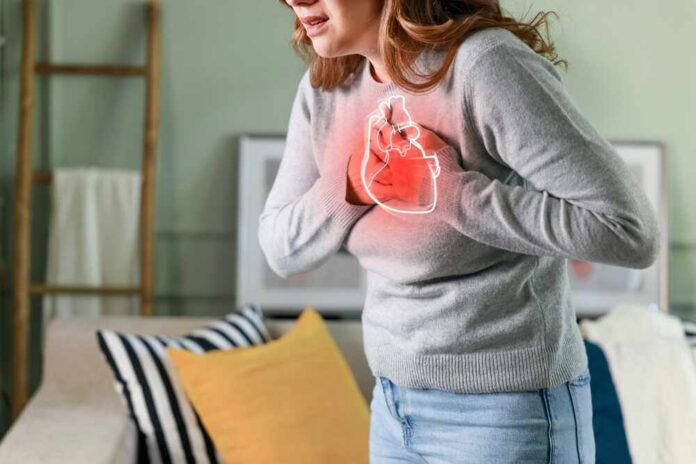
Florida Atlantic University researchers went looking for a modern, U.S.-specific answer to a nagging question: do ultra-processed foods correlate with the outcomes people actually fear—heart attack and stroke? Using 4,787 adults from the National Health and Nutrition Examination Survey collected from 2021 to 2023, they found the people eating the most ultra-processed calories showed a 47% higher risk of cardiovascular disease, defined as self-reported heart attack or stroke.
The headline matters, but the plumbing matters more. The team didn’t just count “junk food.” They classified foods with a validated system designed to capture industrial formulation—products engineered for shelf life and hyper-palatable convenience. Then they compared groups based on how much of their total daily energy came from those products. The association held even after adjustments for several common explanations, a detail that makes the finding harder to shrug off.
Why “Ultra-Processed” Is Not Just Another Word for “Unhealthy”
Ultra-processed foods sit in a specific lane: industrially formulated items built from extracted ingredients, added sugars, refined starches, fats, salt, and an array of additives. Think sodas, ready-to-eat packaged snacks, reconstituted meat products, and many “heat-and-eat” meals. The argument from researchers and heart-health groups has shifted over the last decade from simple nutrient blame to processing blame—meaning the method and additives may matter independent of the nutrition label.
That claim triggers a fair, common-sense objection: if someone eats lots of packaged food, maybe they also smoke more, exercise less, or have less money for fresh groceries. The FAU analysis tried to address that by adjusting for age, sex, race/ethnicity, smoking, and income. That doesn’t prove causation, but it does clear away several of the easiest excuses. The association keeps standing there, like a warning sign you can’t unsee.
How This Study Differs From Prior Alarms—and Why the Numbers Vary
The public has already heard that ultra-processed foods correlate with obesity, metabolic syndrome, inflammation markers, and high blood pressure. The European Society of Cardiology presentations in 2023 sharpened that picture, including a study of Australian women and a large meta-analysis across hundreds of thousands of participants. Those findings pointed to elevated cardiovascular risk, but not always to the concrete “I had a heart attack” endpoint that makes people put down the fork.
The new U.S. analysis may show a higher percentage because it focuses on recent national data and uses a definition of cardiovascular disease rooted in self-reported heart attack or stroke history rather than intermediate signals like hypertension. Different populations, different endpoints, different ways of measuring intake—those variations naturally move the risk estimate. The most responsible takeaway is consistency: across studies, higher ultra-processed intake keeps correlating with worse heart outcomes.
What Cutting Ultra-Processed Foods Looks Like in Real Life
People over 40 already know the trap: you plan to “eat better,” then life happens at 6:30 p.m. The practical move isn’t perfection; it’s substitution that survives a busy week. Swap soda for water or unsweetened tea most days. Replace processed meats with simpler proteins. Build meals around minimally processed staples—eggs, beans, plain yogurt, oats, frozen vegetables, fresh or frozen fruit—then add flavor yourself. Convenience can exist without surrendering control.
The open question is whether the country treats this as a genuine public-health challenge or as another news cycle. Clinicians can counsel patients, and individuals can change habits, but the food environment keeps pushing the opposite direction with relentless marketing and engineered cravings. That tension sets up the next chapter: either the market responds to consumer demand for simpler foods, or healthcare systems absorb the predictable costs of preventable cardiovascular disease.
Ultra-processed foods linked to 67% higher risk of heart attack and stroke https://t.co/KsJQK0fi5Z
— Un1v3rs0 Z3r0 (@Un1v3rs0Z3r0) March 20, 2026
The sharpest warning from the FAU findings is that ultra-processed foods don’t need to “kill you instantly” to win—they just need to nudge risk upward day after day. That’s how heart disease stays America’s top killer: not with drama, but with routine. If the 47% figure makes you skeptical, good. Let it make you curious enough to run one personal experiment: cut the ultra-processed share for 30 days and see what happens to your cravings, waistline, blood pressure, and energy.
Sources:
Ultra-processed foods linked to cardiovascular risk
Ultra-processed foods linked to 47% higher risk of heart attack and stroke
Ultra-processed foods cardiovascular disease
Ultra-processed foods heart health