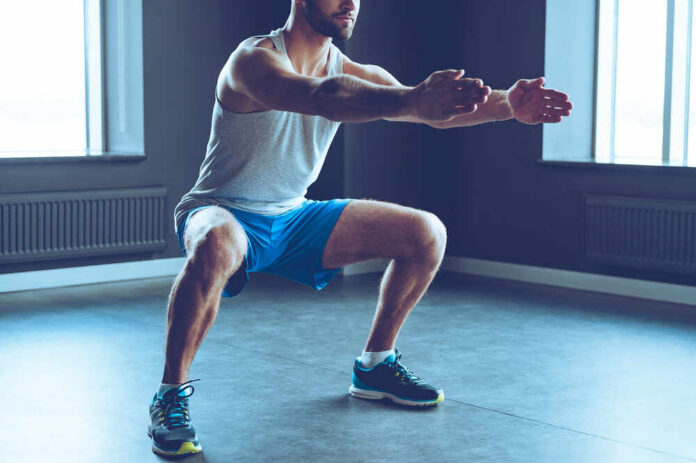
You can build a stronger, more functional core without ever lying on the floor, and the exercises that accomplish this might actually serve you better in daily life than a thousand crunches ever could.
Story Snapshot
- Standing core exercises target deep stabilizers like obliques and transverse abdominis while engaging the entire posterior chain, offering functional strength that translates to real-world movements.
- The approach gained mainstream credibility through endorsements from Runner’s World and Cleveland Clinic, particularly during the home fitness boom of 2020 when mat-free workouts became essential.
- Top movements include standing cross-body crunches, overhead marches, halos with weights, and woodchops, typically performed for 10-20 repetitions per side or 30-45 second intervals.
- This training method benefits runners seeking injury prevention, beginners requiring accessible options, and anyone with back issues who finds floor exercises uncomfortable or impractical.
- Experts unanimously favor these exercises for stability and balance over aesthetic development, emphasizing progressive overload from bodyweight to weighted variations for continued gains.
The Forgotten Truth About Core Training
The fitness industry spent decades convincing Americans that effective ab training required lying on the floor and performing endless repetitions of crunches and sit-ups. This narrative ignored a fundamental reality: your core exists to stabilize your body during upright, dynamic movement. Standing core exercises emerged from functional training and athletic preparation programs that prioritized anti-rotation stability and real-world strength over isolated muscle contraction. Rooted in Pilates principles and athletic conditioning methods, these movements gained serious traction during the 2010s through CrossFit boxes and running programs before exploding into mainstream consciousness during the pandemic-era home fitness revolution.
The accessibility factor cannot be overstated. Standing exercises require no equipment in their basic form, no mat to roll out, and no getting down on potentially dirty or uncomfortable surfaces. For travelers stuck in hotel rooms, office workers on lunch breaks, or anyone with mobility limitations that make floor transitions difficult, this approach removes every excuse. The Cleveland Clinic’s endorsement brought medical credibility to what some dismissed as a fitness fad, validating the biomechanical advantages of recruiting erector spinae muscles, glutes, and deep stabilizers simultaneously with the abdominal wall.
What Makes These Movements Superior for Function
Standing core work fundamentally differs from supine exercises because it demands balance and coordination while strengthening the midsection. When you perform a standing cross-body crunch, bringing opposite elbow to knee, you’re not just contracting the rectus abdominis. You’re stabilizing on one leg, engaging hip flexors and extensors, firing obliques through rotation, and maintaining postural alignment through the entire kinetic chain. This multi-tasking mirrors how your core actually functions when you carry groceries, play with grandchildren, or navigate uneven terrain during a hike.
The standing halo exemplifies rotational strength that traditional floor work cannot replicate. Holding a weight overhead or at chest level while circling it around your head forces the obliques and transverse abdominis to resist unwanted movement in the spine. This anti-rotation capacity protects your back during everyday twisting motions and athletic activities. Runners particularly benefit because pelvic stability during the gait cycle depends on oblique strength to prevent excessive rotation that wastes energy and increases injury risk. The overhead march takes this further by challenging lower abdominal control while one leg swings freely, mimicking the stability demands of single-leg stance phases in running and walking.
The Progressive Path From Beginner to Advanced
Standing core training scales beautifully across fitness levels, which explains its broad adoption from rehabilitation settings to competitive athletics. Beginners start with bodyweight movements like standing oblique crunches and basic twists, performing 10-15 repetitions per side with controlled tempo. The learning curve remains gentle because most movements feel intuitive and the upright position provides immediate feedback about balance and form. As strength develops, practitioners add resistance through dumbbells, kettlebells, or resistance bands, transforming simple woodchops into weighted power generators.
Trainers like Becky Whitney at Redefining Strength have developed progression systems with over 20 variations, allowing practitioners to continually challenge their core without equipment monotony. The weighted halo that felt impossible with 10 pounds eventually becomes manageable with 20 or 30 pounds as stabilizer strength builds. This progressive overload principle, applied to functional movement patterns, delivers both strength gains and practical capability improvements. YouTube creators have democratized access with millions viewing free 10-15 minute standing abs workouts, removing cost barriers while building communities around this training philosophy.
Why Runners and Everyday Athletes Need This Approach
Running economy improves when the core effectively transfers force between upper and lower body without energy leaks from excessive torso rotation or lateral collapse. The obliques and transverse abdominis create this rigid cylinder that allows the legs to drive powerfully while the arms counterbalance efficiently. Standing core exercises train this function directly because they’re performed in the same upright, weight-bearing position as running itself. The transfer from training to performance becomes nearly immediate compared to hoping floor-based ab work somehow translates to better running form.
Injury prevention represents another compelling advantage. Back pain often stems from weak stabilizers that force the spine into compromised positions during daily activities. Standing exercises strengthen the erector spinae alongside the abdominals, creating balanced support for the lumbar region. The Cleveland Clinic specifically recommends these movements for people with back sensitivities precisely because the upright position removes spinal compression present in many floor exercises. For aging populations concerned about fall prevention, the balance component of single-leg standing core movements directly addresses stability deficits that contribute to dangerous tumbles.
The Practical Reality Check
Standing core work excels at building functional strength and stability, but expecting it to deliver the same rectus abdominis hypertrophy as weighted decline sit-ups sets unrealistic expectations. The standing position distributes work across more muscle groups, which enhances overall function but may provide less isolated stimulation for six-pack development. This trade-off makes perfect sense for anyone prioritizing health, performance, and daily capability over appearance. The exercises work best in 30-45 second circuits or 10-20 repetition sets per side, fitting easily into brief training windows or as warm-up components before main workouts. The absence of equipment requirements and floor space needs means these movements can happen anywhere, anytime, removing the logistical friction that derails many fitness intentions. For time-pressed individuals over 40 who need efficiency and results without complexity, standing core training delivers exactly what bodies actually need rather than what magazine covers promise.
Sources:
8 Standing Ab Exercises That Will Improve Your Stability – Runner’s World
Standing Core Exercises – Sweat
Standing Ab Workout – Cleveland Clinic
20 Standing Core Exercises – Redefining Strength
Standing Ab Exercises – Healthline