A golden spice sitting in your kitchen cabinet might just rewire your gut microbiome and calm inflammatory fires that pharmaceutical companies spend billions trying to extinguish.
Story Snapshot
- Turmeric’s curcumin compounds suppress inflammatory markers like TNF-α and IL-6 while enriching beneficial gut bacteria such as Lactobacillus and Bifidobacterium
- 2025 Baylor research reveals turmeric’s essential oils boost curcumin absorption tenfold, delivering superior anti-inflammatory effects in ulcerative colitis models
- Clinical trials show promise for IBD patients, with reduced disease activity scores and endoscopic improvements using accessible dietary intervention
- Experts caution bioavailability challenges persist, recommending 500-1500mg daily doses and warning against relying on turmeric as standalone therapy
Ancient Wisdom Meets Modern Science
Turmeric has traveled from Ayurvedic apothecaries to laboratory benchtops, transforming from folk remedy to research subject. The rhizome of Curcuma longa earned attention in late 20th century studies identifying curcumin as its key polyphenolic compound. Early 2000s preclinical work demonstrated curcumin’s inhibition of NF-κB pathways and cytokines, sparking human trials throughout the 2010s targeting inflammatory bowel diseases. What distinguishes turmeric from typical anti-inflammatory compounds is its dual action: simultaneously dampening inflammation while cultivating beneficial gut bacteria populations that produce short-chain fatty acids like butyrate.
The Bioavailability Breakthrough That Changes Everything
Dr. Ajay Goel at Baylor Scott & White Research Institute cracked a puzzle that plagued turmeric research for decades. Curcumin alone absorbs poorly in the human digestive tract, limiting therapeutic potential regardless of dosage. His 2025 study published in Scientific Reports revealed that turmeric’s essential oils, particularly α-turmerones, increase curcumin bioavailability tenfold while suppressing the inflammatory chemokine CCL17 in ulcerative colitis models. The whole spice outperforms isolated curcumin extracts, vindicating traditional cooking methods that use turmeric root rather than purified supplements. This finding explains why population studies in turmeric-heavy cuisines show lower inflammatory disease rates.
How Turmeric Reprograms Your Gut Ecosystem
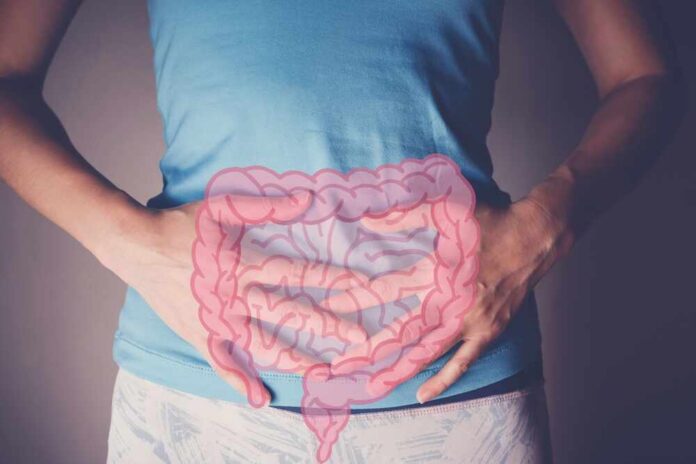
Inflammatory bowel diseases like ulcerative colitis and Crohn’s stem partly from dysbiosis, an imbalanced gut microbiome depleted of protective bacteria. Turmeric intervenes by enriching populations of Lactobacillus and Bifidobacterium while boosting short-chain fatty acid producers. These metabolic byproducts strengthen intestinal barrier integrity, preventing the leaky gut phenomenon where toxins slip into systemic circulation. Clinical studies document reduced disease activity scores and endoscopic improvements in IBD patients using turmeric as adjunct therapy alongside conventional treatments. The spice modulates Th17 and Treg immune cell balance, recalibrating inflammatory responses without the side effect profiles accompanying pharmaceutical immunosuppressants.
The Dosage Dilemma and Practical Applications
UnityPoint Health clinicians recommend 500-1500mg daily protocols for inflammatory conditions, though efficacy remains unclear at lower culinary doses. Harvard Health reviews emphasize more human data is needed to establish universal dosing standards. Johns Hopkins Medicine suggests incorporating turmeric into food preparation as a foundational approach, acknowledging that high therapeutic doses may require standardized supplements. Ubie Health’s 2025 review confirms gut inflammation reduction potential but warns against treating turmeric as pharmaceutical replacement. The tension between accessible kitchen spice and concentrated therapeutic agent persists, with personalized microbiome responses complicating one-size-fits-all recommendations.
The Economic and Social Ripple Effects
Turmeric costs pennies per serving compared to prescription IBD medications that run thousands monthly. This economic accessibility empowers dietary self-management for chronic conditions, shifting healthcare paradigms toward prevention rather than intervention. The supplement market capitalizes on turmeric’s reputation, though experts caution against products lacking essential oil content that enhances absorption. Pharmaceutical companies may eventually view turmeric as adjunct therapy complementing drugs like mesalamine rather than competition. The broader cultural impact involves nutrition research pivoting toward microbiome-spice interactions, exploring how traditional culinary practices inadvertently optimized gut health through compound food combinations our ancestors never scientifically understood.
What Researchers Still Don’t Know
Consensus exists around turmeric’s anti-inflammatory and microbiota-modulating potential, yet significant gaps remain. Personalized responses vary wildly based on individual microbiome compositions, making universal protocols elusive. No standardized clinical dosage exists for specific conditions, leaving practitioners to extrapolate from inconsistent studies. Long-term safety data at therapeutic doses remains limited, particularly regarding interactions with immunosuppressive medications. The bioavailability challenge persists even with essential oil synergies; researchers continue exploring delivery mechanisms like nanoparticles and liposomal formulations. Whether turmeric prevents dysbiosis-related diseases over decades or merely manages symptoms remains unproven, requiring longitudinal population studies tracking dietary patterns against disease incidence across generations.
Sources:
RSD Journal: Turmeric and Gut Health Research
Baylor Scott & White: Researchers Reveal Turmeric’s Health Benefits Extend Beyond Curcumin
Ubie Health: Turmeric Gut Inflammation Dosage
PMC: Curcumin and Inflammatory Bowel Disease
PMC: Turmeric and Gut Microbiota Modulation
UnityPoint Health: Using Turmeric as Anti-Inflammatory
Harvard Health: Turmeric Benefits – A Look at the Evidence
Johns Hopkins Medicine: Turmeric Benefits
Journal of Neurogastroenterology and Motility: Curcumin in Gastrointestinal Diseases