Your immune system can declare war on your brain while you sleep, and the specific antibody it deploys determines whether you will ever fully recover.
Quick Take
- Autoimmune encephalopathies cause distinctive sleep disorders that vary depending on which antibody is attacking the nervous system.
- Leucine-rich glioma-inactivated protein 1 (LGI1) and Contactin-associated protein-like 2 (CASPR2) antibody disorders produce recognizable sleep signatures including dream enactment, severe insomnia, and sleep apnea.
- Morvan syndrome, linked to CASPR2 antibodies, can produce a terrifying condition called agrypnia excitata — a near-total inability to sleep accompanied by hallucinations and motor chaos.
- Cell-surface antibody disorders generally respond better to immunotherapy than intraneuronal antibody disorders, which tend to cause deeper, less reversible brain damage.
When the Immune System Attacks Sleep Itself
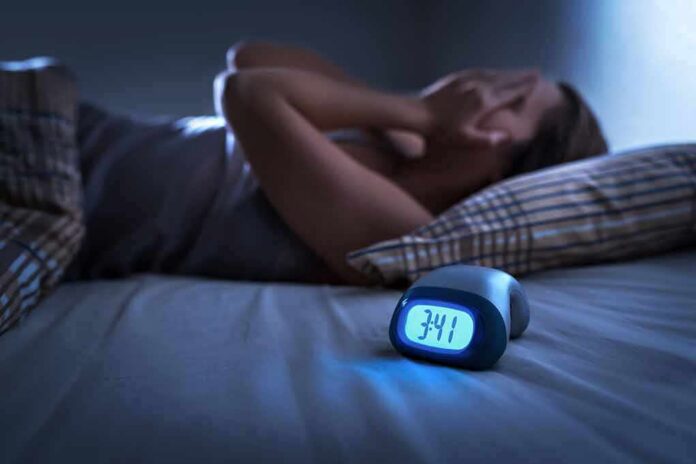
Most people assume insomnia is a stress problem or a bad habit. Few would guess their immune system is the culprit. In autoimmune encephalopathies, the body produces antibodies that attack brain tissue directly, and sleep is often the first and most dramatic casualty. Sleep disturbances appear in more than half of autoimmune encephalitis patients and span the full spectrum from crushing insomnia to uncontrollable sleepiness, from acting out violent dreams to breathing that stops repeatedly through the night. [10]
The key to understanding why one patient can barely stay awake while another cannot sleep at all often lies in a single question: which antibody is doing the damage, and where exactly in the brain is it landing? That distinction is not academic. It shapes diagnosis, treatment urgency, and the realistic odds of meaningful recovery.
LGI1 and CASPR2: A Sleep Disorder With a Biological Fingerprint
Leucine-rich glioma-inactivated protein 1 (LGI1) and Contactin-associated protein-like 2 (CASPR2) antibodies sit on the cell surface, which makes them more accessible to immunotherapy and generally more reversible when caught early. Polysomnographic studies of patients carrying these antibodies found frequent dream enactment behavior, insomnia, REM sleep without atonia, sleep apnea, and measurably shallower sleep architecture across the board. [1] Sleep disorders appear in 20 to 65 percent of patients with LGI1 antibody encephalitis and 22 to 68 percent of those with CASPR2 antibody disease. [7]
Continuous insomnia is more common in CASPR2 encephalitis than in LGI1 encephalitis, while dream enactment behavior shows up prominently in both. [8] These are not vague complaints. Polysomnography captures them objectively, which means clinicians who know what to look for can use sleep study findings as a diagnostic pointer toward the underlying autoimmune cause rather than chasing a primary sleep disorder for months before anyone orders the right antibody panel.
Morvan Syndrome: The Most Extreme Sleep Attack the Immune System Can Launch
Morvan syndrome represents the far end of CASPR2-related disease, and it is genuinely alarming. The condition combines severe nerve hyperexcitability, profound autonomic dysfunction, neuropsychiatric symptoms, and a sleep disorder called agrypnia excitata — essentially an almost complete inability to sleep paired with hallucinations, excessive sweating, and continuous abnormal movements. [3] Insomnia can be the presenting sign that brings a patient to medical attention before any other feature of Morvan syndrome becomes apparent. [4]
A documented case involved a 16-year-old who presented with back pain, insomnia, profuse sweating, and constipation following a respiratory illness, ultimately confirmed to carry both CASPR2 and LGI1 antibodies. [6] The syndrome has also appeared following COVID-19 infection, reinforcing the link between viral immune activation and autoimmune neurological injury. [5] The critical clinical point is that these patients are not simply anxious or depressed. Their nervous systems are under active immune assault, and the sleep destruction is a direct biological consequence.
Why Antibody Type Determines More Than Just Sleep Symptoms
The distinction between cell-surface antibody disorders and intraneuronal antibody disorders matters far beyond sleep phenotype. Cell-surface targets like LGI1 and CASPR2 are accessible to antibody-mediated damage that can often be interrupted with immunosuppression, and many patients recover substantially. Intraneuronal antibody disorders, such as anti-Ma2, typically signal deeper hypothalamic or brainstem injury, carry a stronger association with underlying cancer, and tend to leave more permanent neurological damage even with aggressive treatment. [4] The honest scientific picture, though, is that antibody class alone does not perfectly predict outcome. Other factors including speed of diagnosis, tumor burden if present, and individual immune response all contribute. Sleep symptoms in autoimmune encephalitis are heterogeneous across syndromes, and real-world cases frequently defy clean categorical predictions. [9]
The Clinical Takeaway That Could Change a Diagnosis
The practical value of understanding sleep in autoimmune encephalopathies is that it can shorten the diagnostic odyssey that plagues these patients. A middle-aged person presenting with unexplained insomnia, vivid dream enactment, and autonomic instability is not automatically a psychiatric case or a primary sleep medicine case. Autoimmune encephalitis belongs on the differential, and the specific sleep pattern can point toward the responsible antibody before any other workup is complete. [1] Sleep disturbances in these conditions respond favorably to immunotherapy when the underlying autoimmune process is treated, which makes early recognition genuinely life-altering. [4] The immune system and the sleeping brain are more tightly connected than most clinicians were ever trained to appreciate, and that gap in awareness still costs patients years of their lives.
Sources:
[1] YouTube – The Weird World of Sleep in Autoimmune Encephalopathies: Part 1: …
[3] Web – Chapter 22 – Sleep and Autoimmunity
[4] Web – Morvan syndrome and related disorders associated with CASPR2 …
[5] Web – Sleep Disorders and Autoimmunity: Insomnia as the Presenting Sign …
[6] Web – Post-Coronavirus Disease Autoimmunity-associated Morvan’s …
[7] Web – Morvan syndrome associated with CASPR2 and LGI1 antibodies in …
[8] Web – Sleep Disorders in Leucine-Rich Glioma-Inactivated Protein 1 and …
[9] Web – Sleep Disturbances in Autoimmune Neurologic Diseases – Frontiers
[10] Web – Sleep disturbances are common in patients with autoimmune …