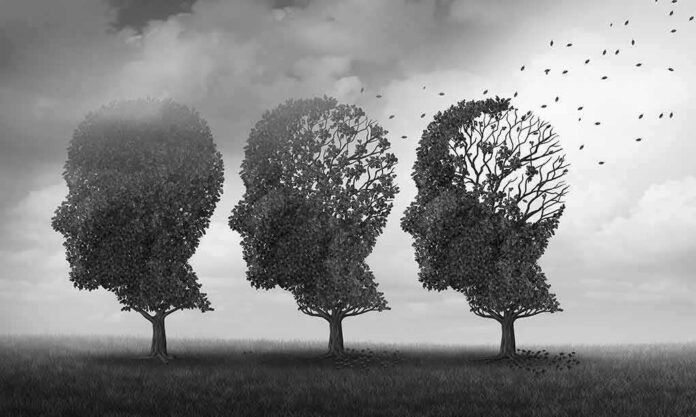
Some brain disorders age the brain years faster than others, and a massive new scan study just showed exactly which ones do the most damage.
Quick Take
- Researchers compared nearly 49,000 brain scans to measure how “old” each brain looked compared to a person’s real age.
- Alzheimer’s disease and mild cognitive impairment showed the biggest gap between brain age and real age.
- Psychiatric disorders and addiction also aged the brain faster, but less severely than dementia-related conditions.
- ADHD and autism did not show overall accelerated brain aging in this study.
A Massive Scan Study Measures The Brain’s True Age
A team of researchers built one of the largest brain-aging comparisons ever done. They pulled structural MRI scans from 45,900 healthy people and 2,698 patients with nine different brain conditions, including Alzheimer’s disease, mild cognitive impairment, schizophrenia, bipolar disorder, major depression, addiction, ADHD, and autism. The goal was simple. Figure out which conditions make a brain look older than it actually is.
The study, led by researcher Chuang Liang at Nanjing University of Aeronautics and Astronautics, used scans to predict a “brain age” for each person. Scientists then compared that predicted age to the person’s actual birth age. The difference, called the Predicted Age Difference, tells doctors whether a brain looks older or younger than it should for someone’s years on earth.
Dementia-Related Disorders Topped The List By A Wide Margin
Alzheimer’s disease and mild cognitive impairment showed the largest brain-age gaps of any condition studied. These two disorders pulled far ahead of everything else measured, confirming what doctors have suspected for years. Dementia does not just slow thinking. It physically reshapes the brain in ways that scans can detect and measure with striking clarity.
Psychiatric disorders and substance addiction landed in the middle of the pack. People with schizophrenia, bipolar disorder, major depression, and addiction all showed brains that looked older than their actual age, though the gap was smaller than what showed up in dementia patients. This matters because it means mental illness and substance abuse leave a measurable physical mark on brain tissue, not just a behavioral one.
ADHD And Autism Broke The Pattern Entirely
Here is the twist that surprised researchers most. ADHD and autism did not show accelerated brain aging overall, setting them apart from every other condition in the study. That finding pushes back against any assumption that every brain difference automatically means faster aging. Some conditions change how a brain works without changing how old it looks on a scan.
The study also found that different disorders hit different parts of the brain, yet nearly all of them shared one common trouble spot: the prefrontal cortex. That region controls judgment, planning, and impulse control. Researchers linked disorder-specific aging effects to genes tied to different biological functions, suggesting no single aging process explains everything.
How This Fits What Scientists Already Knew
This is not the first time brain-age research has turned up an elevated aging signal across multiple disorders. Earlier meta-analyses found higher brain-age gaps in schizophrenia, multiple sclerosis, mild cognitive impairment, and dementia, with the strongest effects showing up in dementia patients, matching the new findings closely. A 2026 review of 65 separate MRI cohort studies reached a similar conclusion, reporting that brain-age gap stays elevated across a wide range of neurological and psychiatric disorders.
The real debate among scientists is not whether brain aging shows up in these conditions. It clearly does. The question is whether one shared biological clock drives it all, or whether each disorder runs its own separate aging process that happens to produce similar results. This new study leans toward the second idea, pointing to distinct brain regions and distinct genetic links for each condition.
Why This Should Matter To Anyone Over Forty
Brain scans that measure aging years before symptoms appear could give doctors a real head start on treatment. For families watching a loved one struggle with memory, mood, or addiction, a tool that flags accelerated brain aging early offers something rare in medicine: a warning sign that arrives before the damage becomes irreversible. That kind of early detection has real value for treatment decisions and family planning alike.
Just discovered something interesting. A massive MRI study found that Alzheimer’s disease, mild cognitive impairment, psychiatric disorders, and addiction are associated with distinct patterns of accelerated brain aging. The strongest effects appeared in Alzheimer.
— theofficialblu3 (@Thepsydoctor) October 4, 2026
Common sense says you cannot fix what you cannot measure. This research gives doctors a sharper ruler for a problem that used to be guesswork. Whether that ruler eventually becomes part of routine checkups remains to be seen, but the data itself stands on solid ground, built from tens of thousands of real patient scans rather than speculation.
Sources:
sciencedaily.com, earth.com, pmc.ncbi.nlm.nih.gov, medicalxpress.com, nature.com, auntminnie.com, escholarship.org