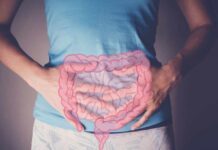
Women with gum disease took 7.1 months on average to conceive, compared to 5 months for women with healthy gums — and most fertility specialists never ask about your teeth.
Quick Take
- A published literature review found that gum disease may delay conception and disrupt reproductive health through chronic inflammation and bacteria entering the bloodstream.
- Women with a specific oral bacteria called Porphyromonas gingivalis in their saliva faced three times the risk of not conceiving compared to women without it.
- A mouse study found that chronic oral inflammation impaired ovarian function and reduced fertility, though human ovarian data is still limited.
- The science is promising but not yet settled — most evidence shows association, not direct proof that gum disease causes ovarian damage in women.
The Mouth-to-Ovary Connection Most Doctors Skip
Your dentist and your fertility doctor almost never talk to each other. That gap may be costing some women months of trying to conceive. A review published in PubMed Central found that gum disease, known clinically as periodontal disease, may affect a woman’s ability to get pregnant through two main pathways: bacteria spreading through the bloodstream, and the body releasing inflammatory chemicals called cytokines that can interfere with reproduction. [7]
The review cited an Australian study showing that women with oral inflammation took an average of 7.1 months to conceive, while women with healthy gums conceived in about 5 months. [7] That is a meaningful gap. It does not prove gum disease caused the delay, but it is hard to ignore a difference of more than two months in a head-to-head comparison.
Bacteria in Your Mouth Can Travel Farther Than You Think
Here is where it gets specific and a little unsettling. One oral bacteria, Porphyromonas gingivalis, has been found in the saliva of women struggling to conceive. Women who carried this bacteria faced three times the risk of not getting pregnant compared to women without it. [6] Fertility clinics have also noted that bacteria from gum infections can sometimes migrate to reproductive organs, where they may interfere with embryo implantation. [4] This is not fringe theory — it is basic microbiology applied to a body system most people never connect to the mouth.
Even low-grade mouth inflammation, the kind with no visible bleeding or pain, may send bacterial signals through the body that affect the reproductive system. [11] The bacteria do not have to travel directly to the ovaries to cause trouble. They can trigger a body-wide inflammatory response that quietly disrupts hormonal balance and ovulation over time. [2]
What the Animal Research Suggests About Ovarian Health
The most direct ovarian claim comes from a mouse study. Researchers found that chronic oral inflammation impaired ovarian function and reduced fertility in the animal model. [12] Mouse studies do not automatically translate to humans, and critics are right to flag that gap. But animal models exist precisely because we cannot run certain experiments on people. The mouse findings give researchers a biological reason to look harder at human ovarian data — data that, frankly, has not been collected yet at scale.
The PubMed Central review is careful to use words like “could” and “may” rather than “causes.” [7] That is honest science. The review also acknowledges it analyzed only a limited number of studies on female infertility. The evidence is real but incomplete. The problem is that clinic blogs and wellness content often skip the caution and present the oral-fertility link as settled fact. [3] It is not — but that does not mean you should ignore it either.
Polycystic Ovary Syndrome and the Inflammation Feedback Loop
Women with polycystic ovary syndrome (PCOS) face a particularly frustrating dynamic here. PCOS already drives elevated systemic inflammation throughout the body. That inflammation can make gum disease worse, and worsening gum disease can push more inflammatory signals back into the system. [2] It becomes a loop where one condition feeds the other. For women already navigating PCOS and fertility challenges, oral health is one lever that is cheap to address and almost never discussed in a reproductive endocrinologist’s office.
What You Can Actually Do With This Information
The science does not yet support the claim that fixing your gums will fix your fertility. That would be overstating it. What the evidence does support is this: chronic gum inflammation is a source of systemic stress that your body has to manage constantly. [1] If you are trying to conceive, reducing that burden makes biological sense. Get a periodontal screening. Ask your dentist specifically about Porphyromonas gingivalis. Treat active gum disease before or during fertility treatment. These are low-risk steps with potential upside. Waiting for a perfect randomized trial before acting on a plausible, low-cost intervention is its own kind of risk.
Sources:
[1] Web – This Overlooked Source Of Inflammation May Affect Ovarian Health & …
[2] Web – Is Your Gum Health Stopping Pregnancy? The Inflammation Link …
[3] Web – The Surprising Connection Between Oral Health and Fertility
[4] Web – Oral Health And Fertility: Research On Teeth And Conception
[6] Web – Gum disease may impair female fertility by triggering inflammation …
[7] Web – Connecting Periodontal Disease and Infertility
[11] Web – How Oral Health Affects Fertility, Egg Quality & IVF Success
[12] Web – Could gum inflammation affect fertility? New study suggests a link