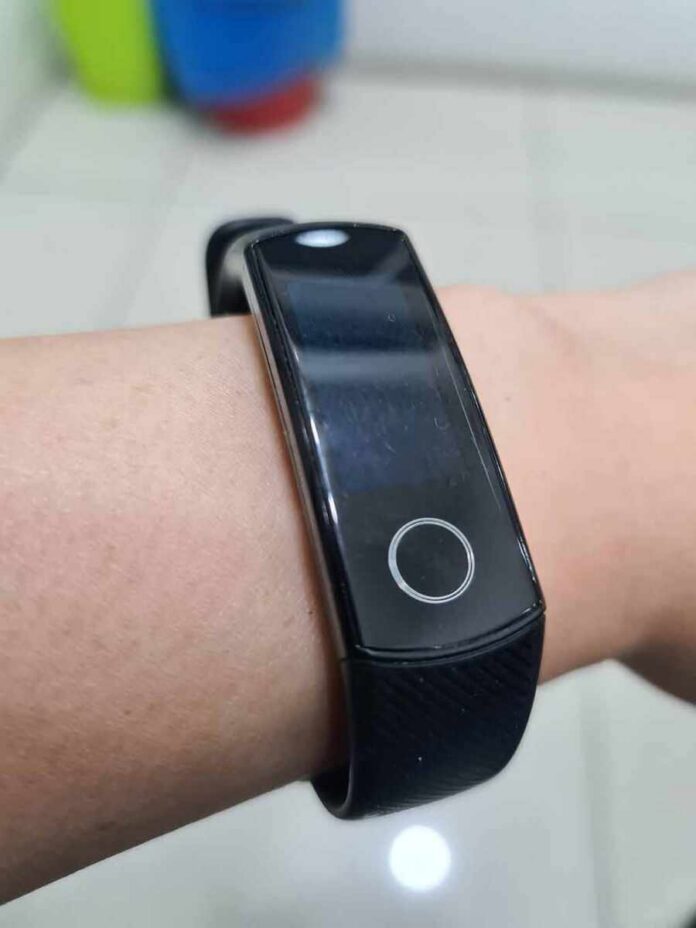
Google’s new Fitbit Edge packs a screen, built-in GPS, and an altimeter into a wrist tracker priced $80 above its sibling, the Fitbit Air.
Quick Take
- The Fitbit Edge costs $179 and adds a screen, GPS, and an altimeter missing from the $99 Fitbit Air.
- The Edge shows pace and heart rate live during workouts and maps routes without needing a phone nearby.
- Both trackers share IP68 and 5ATM water resistance, so neither one skips swim or sweat protection.
- Google claims the Edge’s GPS is up to 40 percent more accurate than older Fitbit trackers, though that number has not been independently tested yet.
What Separates The Two New Fitbit Trackers
The core difference comes down to a screen and a GPS chip. The Edge displays live pace and heart rate while you run or ride, according to Men’s Health’s comparison of the two devices. The Air skips the screen entirely, keeping its design simple and its price lower for buyers who just want daily health numbers without extra hardware.
That GPS chip matters most to outdoor athletes. The Edge can record a full route, calculate distance, and log split times without a phone in your pocket, Men’s Health reports. Runners who hate carrying a phone on a 10-mile loop get a real reason to pay more. Casual walkers tracking daily steps may never notice the difference.
Elevation Tracking And Price Gap Explained
The Edge also includes an altimeter, a sensor that reads air pressure to measure elevation gain on hilly runs or floors climbed during a stair workout. That’s a feature dedicated runners and hikers actually use to judge workout intensity, not just a spec sheet bullet point. The Air has no equivalent, since it was built around simplicity rather than performance tracking.
Price is where the decision gets real for most buyers. The Edge runs $179, while the Air sits at $99, a straight $80 gap tied directly to the screen, GPS, and altimeter. Both devices carry IP68 dust resistance and 5ATM water resistance, meaning swimmers and sweaty gym-goers are covered either way, regardless of which tracker they pick.
What Google’s Accuracy Claim Still Needs To Prove
Google says the Edge’s GPS is up to 40 percent more accurate than its earlier trackers, a figure repeated in the Men’s Health comparison. That’s a bold number, and conservative-minded buyers should treat any manufacturer’s self-graded performance claim with healthy skepticism until outside testers get their hands on it. Companies naturally highlight their best-case scenarios.
Independent reviewers of other wearables routinely test GPS accuracy by running measured loops and comparing tracks against reference-grade devices across open fields, wooded trails, and city streets. One review of a rival GPS watch found it stayed accurate against official marathon routes. That’s the kind of real-world test the Edge still needs before buyers should fully trust Google’s number.
Missing Smartwatch Features Worth Knowing About
The Edge isn’t a full smartwatch replacement. It skips a microphone, speaker, NFC payments, Wear OS, and any app store, focusing instead purely on fitness metrics. Buyers expecting Apple Watch-style convenience, like tapping to pay for coffee mid-run or taking a call on their wrist, won’t find those tools here. This is a sports tool first, not an everyday communication device.
Battery life under constant GPS use is another open question. Google advertises roughly a week of battery life without an always-on display, but that figure doesn’t specifically describe continuous GPS recording during long runs or rides. Anyone training for a marathon should ask retailers directly about GPS-mode battery drain before committing to either device.
Compare the Fitbit Air vs. Fitbit Edge: see what the $80 price jump gets you, from an AMOLED screen and built-in GPS to ECG tracking and aluminum build. pic.twitter.com/RAUsq2EoYe
— SlashGear (@slashgear) November 9, 2026
Choosing between the Edge and the Air really comes down to how you train. Casual walkers chasing step counts and basic sleep data have little reason to pay the extra $80. Runners and cyclists who want a visible pace readout and phone-free route mapping get real, usable value from the Edge’s screen, GPS, and altimeter combination.