Millions of people carry hard little stones in their gallbladder without ever knowing it, until one meal sends sudden, gripping pain across their upper right side.
Quick Take
- Gallstones are hard deposits made mostly of cholesterol or bilirubin that form inside the gallbladder.
- Most people with gallstones feel nothing at all until a stone blocks a bile duct.
- Blocked bile ducts cause gallbladder attacks, also called biliary colic, with pain under the right ribs.
- Risk factors include excess cholesterol, too much bilirubin, and a gallbladder that does not empty fully.
What Gallstones Are And How They Form
Gallstones are hard, pebble-like pieces that build up inside the gallbladder, a small organ that stores bile under the liver. Most are made mostly of cholesterol. Others form from bilirubin, a yellow substance made when the body breaks down old red blood cells. The National Institute of Diabetes and Digestive and Kidney Diseases describes them simply as hard material that develops inside this small storage pouch over time.
Bile is supposed to stay liquid as it moves from the liver to the gallbladder and then into the small intestine to help digest fat. Stones form when that chemical balance tips out of line. Too much cholesterol, too much bilirubin, or not enough bile salts can let solid particles crystallize. A gallbladder that fails to empty completely gives those crystals more time to stick together and grow.
Why Most Stones Stay Silent
Here is the part that surprises many people. The large majority of gallstones cause zero symptoms. Studies show that nearly 80 percent of gallstones are found by accident, often during an unrelated scan, and never announce themselves with pain. Doctors call these silent stones, and in most cases they simply get watched rather than treated, since surgery on a stone that causes no trouble carries its own risks without a clear benefit.
The trouble starts when a stone shifts position and blocks one of the small tubes that carry bile out of the gallbladder. That blockage causes bile to back up, the gallbladder squeezes hard trying to force the stone through, and that muscle contraction is what produces the pain patients describe as a gallbladder attack.
Recognizing A Gallbladder Attack
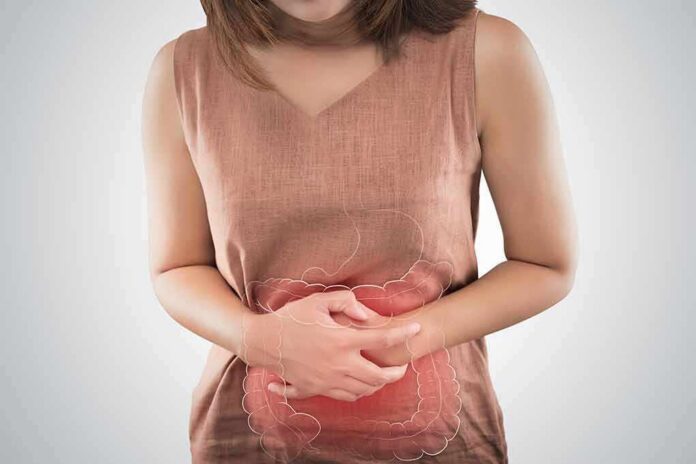
Biliary colic typically strikes in the upper right or center of the abdomen, often within an hour of eating a fatty meal. The pain can be intense, steady, and last anywhere from thirty minutes to several hours before easing. It frequently spreads toward the back or the right shoulder blade, and it can arrive alongside nausea, vomiting, fever, or a general feeling of heaviness beneath the ribs.
A longer-lasting or more severe attack deserves urgent medical attention, since a trapped stone can lead to infection or inflammation of the gallbladder itself. Warning signs include fever, yellowing skin or eyes known as jaundice, dark urine, and pale stools, all of which point to bile that cannot drain properly and needs a doctor’s evaluation right away.
Putting One Video Into A Wider Picture
A short animated explainer, like the one produced under the GutDr name, fits a familiar mold in online health content: a quick, visually clear summary of gallstone causes and symptoms that lines up with what major health agencies publish. That kind of video can be a useful starting point for viewers who want to understand a diagnosis or a family member’s symptoms before their next doctor visit.
Short videos still cannot replace a full medical workup, and that is true across the entire category of online health content, not just this one video. Research on medical videos uploaded to platforms like YouTube finds real variation in accuracy and completeness depending on the topic, so viewers do well to treat any single video as an introduction rather than a diagnosis. For a condition like gallstones, where silent stones usually need no treatment but blocked ducts need urgent care, that distinction matters. Anyone with abdominal pain that fits this pattern should still call a doctor rather than rely on a video alone, a sensible and unremarkable caveat given how much the right response depends on individual history and imaging.
Sources:
niddk.nih.gov, myhealth-devon.nhs.uk, uhbristol.nhs.uk, jmir.org, link.springer.com