Two runners who trained for months to cross a finish line never made it home, dying within a day of each other after marathons on opposite sides of the world.
Quick Take
- Rachel Apa, 24, collapsed near mile 24 of the New York City Marathon on November 1 and died at a hospital.
- Kommineni Gopi, 36, collapsed shortly after finishing the Hyderabad Hi-Tech Full Marathon the same day.
- Apa’s father says rhabdomyolysis, a rare muscle breakdown condition, caused her death.
- Gopi’s death is believed to involve a heart attack, pending final autopsy results.
- Large medical studies show marathon deaths remain extremely rare, even as races draw millions of runners.
Two Races, One Tragic Date
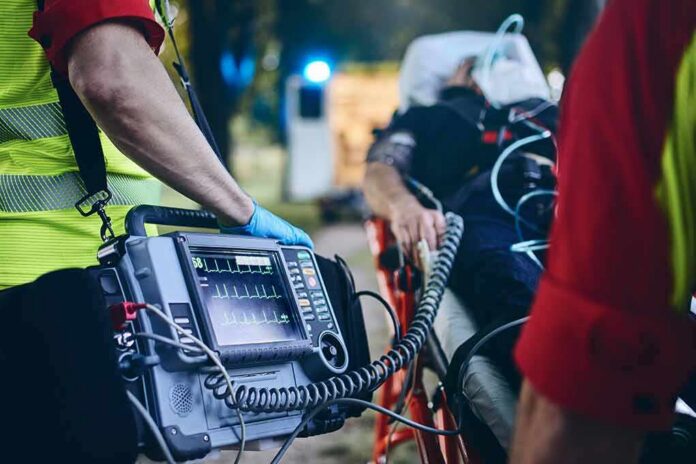
Rachel Apa, a former college field hockey player from Lewisberry, Pennsylvania, was running the TCS New York City Marathon on November 1 when she collapsed near the 24-mile mark, close to Central Park. A bystander started CPR immediately. Race medical staff took over, used a defibrillator, and rushed her to Mount Sinai Hospital, where she later died.
Thousands of miles away in Hyderabad, India, 36-year-old Kommineni Gopi had just finished the 42.2-kilometer Hyderabad Hi-Tech Full Marathon. He was heading to breakfast when he collapsed near Gachibowli Stadium. He was declared dead shortly after. Both runners were described by family and colleagues as fit, active, and experienced in endurance sports.
What Doctors Believe Killed Each Runner
Apa’s father told reporters her cause of death was rhabdomyolysis, a rare but serious condition where damaged muscle tissue breaks down and floods the bloodstream with proteins that can shut down the kidneys. It often strikes after extreme physical exertion, especially in heat or dehydration, and can turn deadly within hours if untreated.
Gopi’s case points in a different direction. Gachibowli police said preliminary findings suggest he suffered a heart attack, and a post-mortem exam was ordered to confirm the exact cause. Doctors examining his case note that undetected coronary artery disease often hides in people who appear outwardly healthy, surfacing only under the extreme stress of a full marathon.
How Rare Is Sudden Death During a Marathon
The numbers tell a reassuring story, even after a week like this one. A landmark study tracking 10.9 million marathon and half-marathon finishers in the United States found just 59 cardiac arrests, a rate of roughly half a case per 100,000 runners. A separate analysis put the odds of sudden cardiac death at about one in 220,000 finishers.
More recent data covering 29 million race finishers found 176 cardiac arrests total, with the rate holding steady even as participation grew and survival rates improved thanks to faster defibrillator access. The takeaway is not that marathons are becoming more dangerous. It is that when tragedy strikes, it strikes fast and often without warning, which is exactly why these two deaths feel so alarming.
Warning Signs Every Runner Over 40 Should Know
Common sense still matters more than any fitness tracker. Dark urine, severe muscle soreness, swelling, and confusion after a long race can signal rhabdomyolysis and demand immediate emergency care, not a nap and some water. Chest tightness, shortness of breath, or unusual fatigue during training can signal heart trouble that a treadmill test might never catch.
Why are young, seemingly fit marathon runners collapsing during or just after races?
Two recent tragedies have raised a question we need to talk about.
24-year-old Rachel Apa collapsed at Mile 24 of the New York City Marathon, just two miles from the finish line. Her family… pic.twitter.com/bExtjP53zK
— Nmami Agarwal (@NmamiAgarwal) November 5, 2026
Runners over 40 who are ramping up mileage, especially those with a family history of heart disease, benefit from a cardiac screening before chasing a marathon medal. Hydration matters, but so does pacing, rest, and listening to a body that is sending signals. Two families are grieving this week. Honoring that grief means taking the warning seriously, not dismissing it as bad luck.
Sources:
firstpost.com, telanganatribune.com, local21news.com, ndtv.com, indianexpress.com, timesnownews.com, pubmed.ncbi.nlm.nih.gov, nejm.org