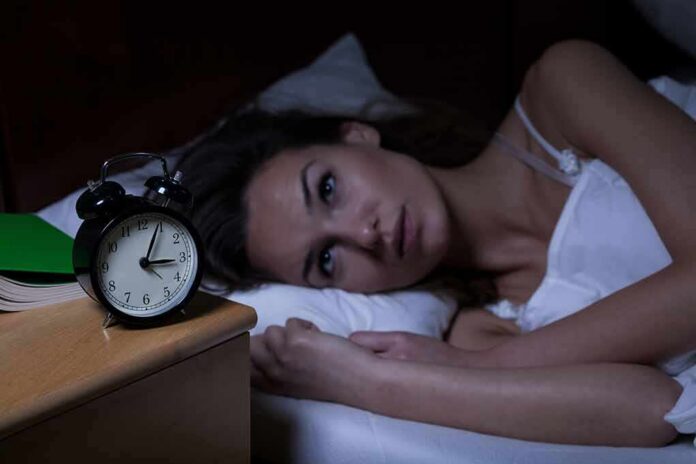
Clocks fell back an hour this weekend, handing most Americans a rare gift: an extra sixty minutes of sleep. But sleep doctors say that one good night does not erase the bigger problem buried in how the country handles time changes.
Quick Take
- The American Academy of Sleep Medicine says the fall “fall back” gives a short-term sleep boost, but the spring “spring forward” carries real health risks.
- The group’s 2020 position statement links the spring clock change to more strokes, hospital visits, and a traffic fatality spike of up to 6% in the days right after.
- The Academy wants Congress to lock in permanent standard time, not permanent daylight saving time, because it better matches the body’s internal clock.
- History offers a warning: the U.S. tried permanent daylight saving time in 1974, and public support collapsed within two months once dark winter mornings hit.
Why One Extra Hour Of Sleep Still Matters
Falling back feels like a small reward, but doctors treat it as more than a nice weekend perk. The American Academy of Sleep Medicine has spent years studying how clock shifts mess with the body’s internal rhythm, known as the circadian clock. That rhythm controls when you feel alert, when you get hungry, and when your body wants to sleep. Even a one-hour shift can throw it off for days.
The spring change is the real danger, according to the Academy’s research. Losing an hour of sleep in March does more than make people groggy. The group’s position statement points to a documented rise in strokes, hospital admissions, and inflammation markers right after the spring switch. Traffic fatalities climb by as much as 6% in the first few days, a number tied directly to fatigue and reduced alertness behind the wheel.
What Sleep Doctors Actually Want Congress To Do
The Academy is not asking lawmakers to simply stop changing clocks. It wants the country to settle on permanent standard time, not permanent daylight saving time. The group says standard time lines up more closely with how sunlight naturally moves across the day, which keeps the body’s internal clock steady year-round. That distinction matters because Congress has debated bills that would lock in daylight saving time instead, the opposite of what sleep scientists recommend.
A newer concern adds weight to that push. Research published in the journal Current Biology this fall found that permanent daylight saving time would force millions of schoolchildren to wait for buses and walk to class before sunrise. Dark morning commutes raise the odds of traffic accidents involving kids, a risk doctors say gets overlooked in debates focused only on brighter evenings.
America Already Ran This Experiment Once
The country does not have to guess what permanent daylight saving time looks like in practice. Congress tried it in the winter of 1973 and 1974, during an energy crisis, hoping extra evening light would cut fuel use. Public support started strong, with roughly 79% of Americans backing the idea before it took effect. By February, after weeks of dark winter mornings, that support had crumbled to around 42%.
The drop was not just about mood. Florida reported eight schoolchildren killed in traffic accidents in 1974, four times the toll from the year before, with darkness blamed as a factor in most of those deaths. Congress repealed the law within the year. More recently, Senator Tom Cotton cited that same 1974 failure in blocking a Trump-backed push for permanent daylight saving time, calling the earlier experiment an “abject failure.”
The Trade-Off Nobody Can Avoid
Every version of this debate runs into the same wall: sunrise and sunset depend on where you live, not on what Congress decides. A rule that brightens evenings in Michigan darkens mornings somewhere else. That is why the fight over clocks keeps resurfacing instead of getting solved once and for all. The country can pick brighter evenings or safer, better-lit mornings, but it cannot have both at the same time.
For now, the extra hour of sleep from falling back is worth enjoying. It is also worth remembering why sleep doctors keep sounding the alarm every spring. The data on strokes, crashes, and hospital visits is not a one-time fluke tied to a single bad year. It shows up again and again, which is exactly why medical experts keep pushing Congress toward standard time instead of the alternative.
I Support Making Standard Time Permanent!
Here are 10 reasons why.
Every year, millions of Americans are forced to “spring forward” and “fall back,” but few stop to ask why. Daylight Saving Time (DST) disrupts our sleep, safety, and health twice a year without providing any… pic.twitter.com/Uczdj9mk0y
— The Calvin Coolidge Project (@TheCalvinCooli1) November 1, 2026
Whatever Washington decides next, the underlying science has not changed. The body wants consistency, not a twice-a-year shock to its internal clock. Permanent standard time, according to the people who study sleep for a living, is the option that actually delivers that.
Sources:
youtube.com, aasm.org, link.springer.com