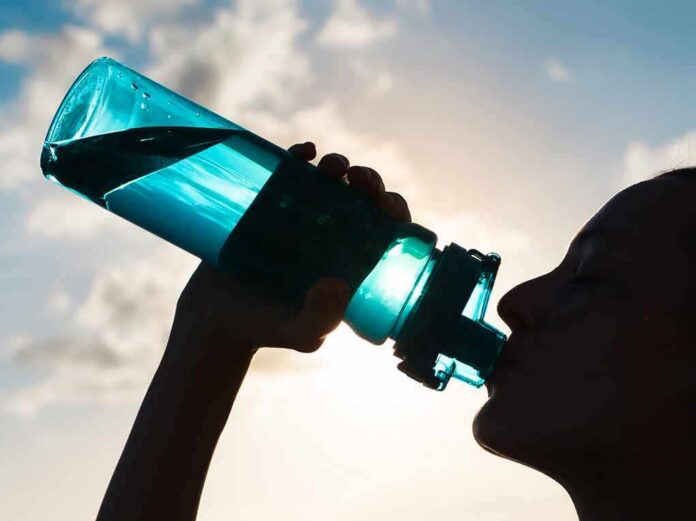
Chugging water before a workout will not make you run faster, and new research says the old advice needs a hard second look.
Quick Take
- A review of 24 studies with 225 people found no clear performance boost from drinking during exercise, compared to drinking little or nothing.
- Official sports medicine guidance never claimed more water equals better performance. It only aimed to stop extreme dehydration.
- Drinking too much water carries its own danger, a condition called exercise-associated hyponatremia, which can be deadly.
- The real answer depends on how long you exercise, how hot it is, and whether you are losing a lot of sweat and salt.
What The New Review Actually Found
The review looked at whether drinking water during a workout helps you finish faster or do more work in a set time. It found no clear advantage for people who drank over those who barely drank at all. The evidence on whether drinking helps you last longer before quitting from exhaustion was too shaky to call one way or the other. That is a meaningful finding, since “hydrate for performance” has been treated like settled science for decades.
Performance scientist Andy Galpin has been saying something similar for a while. He tells athletes they do not need to guzzle water during a session. A few sips, roughly three to six ounces every fifteen to twenty minutes, covers most people. He also stresses that water by itself is not enough, since your body loses electrolytes through sweat, not just fluid.
The Official Guidance Was Never A Blank Check To Drink More
The American College of Sports Medicine’s position on fluid replacement has long said the goal is to prevent losing more than 2% of body weight through sweat, not to maximize how much you drink. That is a safety line, not a performance hack. Somewhere between the lab and the locker room, that modest goal got stretched into “drink constantly for better results,” a claim the original guidance never made.
An earlier 2009 review did find that drinking during exercise can help, but only under specific conditions: the workout has to last long enough for the drink to actually empty from your stomach and get absorbed. A quick 20-minute jog does not qualify. A three-hour bike ride in the heat might. Collapsing those nuances into one blanket rule is where a lot of gym-floor advice goes wrong.
Why The 2% Rule Is Not As Fixed As It Sounds
The commonly repeated warning is that losing 2% of your body weight in sweat wrecks your performance. A 2021 review of endurance hydration research found that a 1% to 3% fluid deficit was less likely to seriously hurt performance than a 4% to 7% deficit. In other words, the danger zone is not one hard line. It shifts depending on how long you are exercising, how hot it is, and what you are actually measuring, like speed, endurance, or heart strain.
Overhydration Is The Risk Nobody Talks About Enough
Here is the part that should worry anyone pushing “just drink more water” as blanket advice. Exercise-associated hyponatremia happens when someone drinks more fluid than they are sweating out, diluting sodium levels in the blood to dangerous levels. It is not a theoretical risk. It has been documented in endurance athletes who followed the “drink early and often” playbook a little too literally. Galpin puts it bluntly: being dehydrated kills performance, but so does overhydrating, and he calls “just drink more water” terrible advice.
None of this means water does not matter. It means the smart approach treats hydration as a dial, not a switch. Match your fluid intake to how much you actually sweat, how long you are working out, and how hot it is outside. Galpin’s own rule of thumb, replacing about 125% of the fluid weight you lost after a workout, reflects that same individualized logic rather than a one-size-fits-all target.
What This Means For Everyday Athletes
For a 30-minute workout in a cool gym, obsessing over water intake is probably wasted energy better spent on form or effort. For a long run in summer heat, fluid and electrolyte planning genuinely matters. Skip the universal slogans, trust the specific conditions, and stop letting marketing departments turn a modest safety recommendation into a miracle performance claim.
Sources:
mindbodygreen.com, health.yahoo.com, acsm.org, onlinelibrary.wiley.com, pmc.ncbi.nlm.nih.gov