A bottle of turmeric pills sold as a natural cure sent one person into fatal liver failure, and lab tests found some turmeric products loaded with toxic lead.
Quick Take
- A 2022 medical case series linked turmeric supplements to 10 serious liver injury cases, including five hospitalizations and one death.
- Independent lab testing found some turmeric products contaminated with lead chromate, a toxic industrial additive, at levels far above safety limits.
- A 2025 scoping review estimated roughly 22 percent of turmeric products tested showed signs of adulteration, including fake curcumin.
- Federal law lets most supplements reach store shelves without safety approval, meaning problems often surface only after people get hurt.
A Popular Spice Becomes A Hidden Health Risk
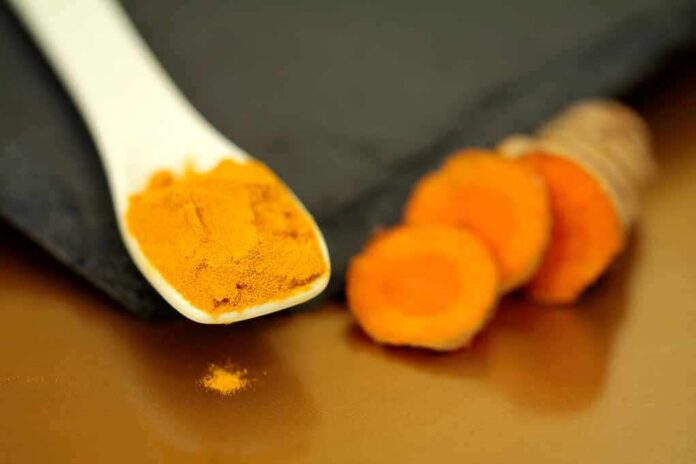
Turmeric has long sat in kitchen cabinets as a harmless curry spice. But turned into concentrated supplement pills and marketed for joint pain, inflammation, and general wellness, it has become something else entirely. Doctors tracking serious liver damage cases started noticing a pattern tied directly to these supplements, not the spice people sprinkle on rice.
The concern is not theoretical. It is documented in peer-reviewed medical research, built from real patients who ended up in hospitals after taking pills marketed as a safe, natural health booster.
The Liver Injury Cases Behind The Warning
Researchers with the Drug-Induced Liver Injury Network published a 2022 case series documenting 10 patients harmed by turmeric supplements. Nine suffered direct liver cell damage, and one had a mixed injury pattern. Five patients needed hospital care, and one died of acute liver failure. Lab testing confirmed turmeric in every tested product, with three also containing piperine, a black pepper extract added to boost absorption.
Symptoms did not show up overnight. Patients developed liver injury anywhere from 16 to 410 days after starting the supplements, with a typical onset around 84 days. That long delay makes it easy for someone to keep taking a product for months without connecting stomach pain or fatigue to the pills in their cabinet. Researchers also found a genetic variant called HLA-B*35:01 strongly linked to the injuries, suggesting some people may be more vulnerable than others.
Lead Contamination Adds Another Layer Of Risk
Liver damage is not the only danger researchers found. A 2024 study published in Science of the Total Environment tested 51 turmeric samples across South Asia and found 14 percent had lead levels above safety thresholds. Some samples from cities including Patna, Karachi, and Peshawar showed lead levels topping 1,000 micrograms per gram, a staggering amount for a product sold as a health aid.
The lead did not appear to be accidental. Researchers found lead and chromium showing up together in a near one-to-one ratio in the worst samples, a pattern consistent with lead chromate being deliberately added to brighten the spice’s color and boost its weight. Children exposed to the most contaminated samples could face blood lead levels up to ten times the Centers for Disease Control and Prevention’s threshold of concern.
Why Labels Don’t Tell The Whole Story
Buying a trusted brand doesn’t guarantee what’s actually inside the bottle. A 2025 scoping review of published studies estimated that about 22 percent of turmeric products sold as supplements showed evidence of adulteration, with fake synthetic curcumin substituted for the real compound a common problem. That means shoppers reading a label listing curcumin content have no guarantee the product was ever tested against that claim.
The Regulatory Gap That Lets This Happen
Unlike prescription drugs, dietary supplements do not need Food and Drug Administration (FDA) approval before hitting store shelves. The agency has stated plainly that it lacks authority to approve supplements for safety or effectiveness before they reach consumers, leaving that responsibility to the companies selling them. Problems typically surface only after adverse event reports or independent lab testing uncovers them, not before.
That after-the-fact system means consumers are effectively the early warning network. A supplement can sit on shelves, get purchased, and cause harm for months before researchers connect enough cases to publish a warning. For a product marketed as safe and natural, that is a sobering trade-off few shoppers realize they are making.
What This Means For Anyone Reaching For The Bottle
None of this means turmeric sprinkled in cooking is dangerous, and the research does not say every supplement bottle is contaminated. But it does mean concentrated extracts, especially those combined with piperine for faster absorption, carry risks that ordinary cooking spice does not. Shoppers deserve honest labels and tested products, not a system that only catches problems after someone ends up in a hospital bed.
Sources:
nutritionfacts.org, pmc.ncbi.nlm.nih.gov, verywellhealth.com, gao.gov