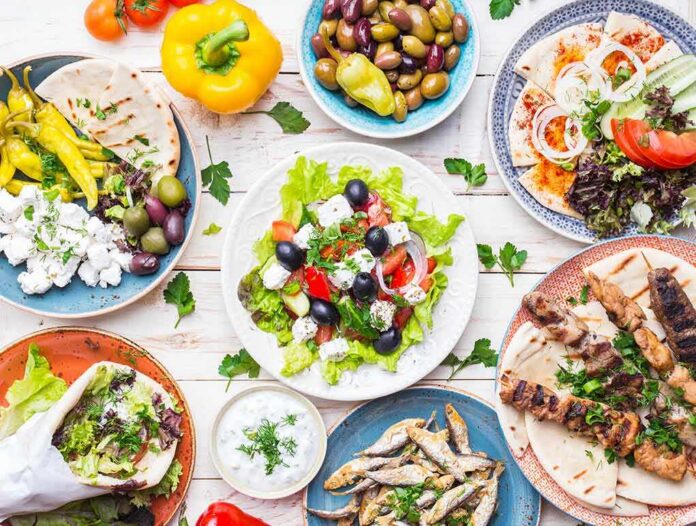
Eating for your heart might also be quietly shaping your mental health, according to a growing body of research linking heart-healthy diets to depression risk.
Quick Take
- Large reviews find heart-healthy eating patterns, like those rich in fruits, vegetables, whole grains, and fish, are tied to lower depression risk.
- Western-style diets high in sugar, fried food, and dairy show the opposite pattern, linked to higher depression risk.
- Researchers point to diet-driven inflammation in the body as a possible explanation for the connection.
- Most of the evidence comes from observational studies, not controlled experiments, so cause and effect is not yet proven.
What The Research Actually Found
A 2017 meta-analysis pooling data on dietary patterns found that healthy eating, marked by high fruit, vegetable, whole grain, fish, olive oil, and low-fat dairy intake, was tied to a lower risk of depression. Western-style eating patterns, by contrast, showed the opposite relationship, tracking with higher depression risk across the pooled studies.
A 2023 umbrella review backed this up on a bigger scale, examining 19 separate reviews of observational studies and clinical trials. It found that closer adherence to Mediterranean-style eating, along with lower scores on a measure called the dietary inflammatory index, lined up with lower depression risk across multiple diet categories, including Mediterranean, DASH, and Western patterns.
Inflammation Emerges As The Likely Culprit
Researchers analyzing national health survey data found that people eating diets scored as more inflammatory had higher odds of depressive symptoms. That link held up even after accounting for their heart disease risk score, suggesting diet and mood may be connected through a pathway separate from cardiovascular health alone.
The proposed mechanism centers on inflammatory markers in the blood, things like C-reactive protein and interleukin-6. Diets heavy in sugar, saturated fat, dairy, and fried foods are tied to higher levels of these markers, and elevated inflammation has separately been studied as a factor in depression. It is a plausible chain, but not yet one science has fully confirmed step by step.
Why Scientists Are Careful About The Word “Proof”
Most of this evidence is observational, meaning researchers tracked what people ate and whether they later reported depression symptoms, without controlling every other factor in their lives. Depression itself can change appetite, activity levels, and food choices, which muddies which direction the cause actually runs.
Socioeconomic status and health behaviors complicate the picture further. One study tracking dietary patterns and depressive symptoms over time specifically weighed income, smoking, drinking, and cardiovascular risk as competing explanations, finding these factors mattered alongside diet itself.
Not All “Healthy” Diets Are Labeled The Same Way
Part of the challenge is that researchers do not use one single definition of a heart-healthy diet. Studies group foods into Mediterranean, DASH, prudent, and dietary-inflammatory-index patterns, each scored differently and tested in different populations. That mix makes it hard to say that one specific heart-healthy diet, rather than healthy eating broadly, drives the depression link.
Earlier research reviewing diet quality and depression found the evidence for traditional Mediterranean or Norwegian-style eating was inconsistent, even though some studies did find associations. This history of mixed results is a reminder that nutrition science often builds slowly, through many imperfect studies rather than one clean answer.
What Controlled Trials Have Shown So Far
Randomized trials, where researchers actually assign people to different diets and track results, remain rare in this field. One review of whole-diet intervention studies found that nearly half, about 47 percent, showed a significant improvement in depression scores compared to control groups, while the rest showed no real difference.
That split result fits a field still building its evidence base. The signal between heart-healthy eating and lower depression risk shows up often enough across studies to take seriously, but not consistently enough yet to call it settled science. For readers, the practical takeaway stays simple: eating well for your heart remains sound advice, and any possible mood benefit is a bonus worth watching as more research comes in.
Sources:
pubmed.ncbi.nlm.nih.gov, cambridge.org, academic.oup.com, pmc.ncbi.nlm.nih.gov, link.springer.com