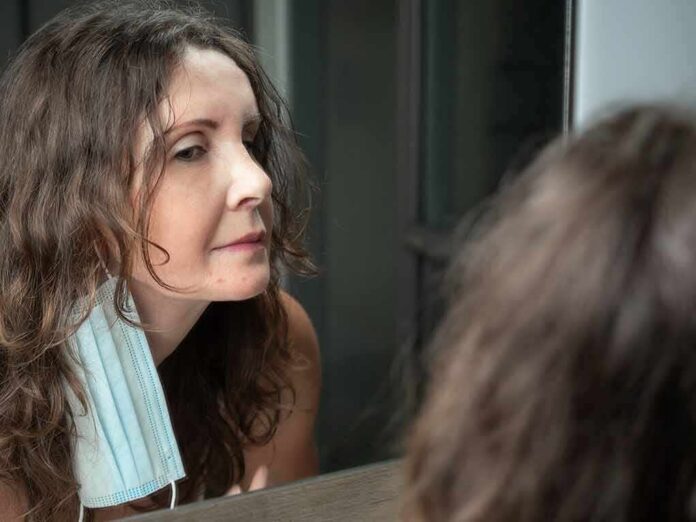
Doctors across the country say popular weight-loss drugs like Ozempic and Wegovy are leaving patients with a side effect no one warned them about: faces that look years older in just months.
Quick Take
- Fast, heavy weight loss from GLP-1 drugs can drain fat from the face, causing hollow cheeks and loose skin.
- Doctors now call the condition “Ozempic face,” a term coined by a New York dermatologist.
- Plastic surgeons report more patients asking for fillers and skin treatments to fix the look.
- Researchers agree facial fat loss is real but say more study is needed to prove the drugs cause a unique pattern.
Fast Weight Loss Reshapes the Face
Semaglutide, the active ingredient in Ozempic and Wegovy, drives rapid and large body changes. Patients using the drug for 68 weeks lost nearly 15% of their body weight, compared with just over 2% for those on a placebo. That kind of fast fat loss does not stay in the belly or thighs. It also drains fat from the face, hollowing out the temples, cheeks, tear troughs, and jawline.
Facial fat acts like natural padding that keeps skin smooth and tight. When that padding disappears quickly, skin that once fit snugly starts to sag. Doctors say this can make wrinkles, marionette lines, and folds around the nose and mouth stand out more than before, giving the face a tired or aged look that was not there before treatment began.
A Dermatologist Names the Trend
New York dermatologist Paul Jarrod Frank first coined the term “Ozempic face” to describe the sagging and aging he saw in patients using the drug for weight loss. The phrase quickly spread on social media and in medical journals, becoming shorthand for a pattern clinicians were already noticing in exam rooms nationwide, even before formal studies caught up to the trend.
Media coverage and online discussion pushed the term further into the mainstream. Reporters, dermatologists, and patient forums described facial volume loss, loose skin, and a prematurely aged appearance, all tied to the rapid fat reduction these medications produce. The label stuck because it captured something patients were already seeing in the mirror.
Surgeons Report a Surge in Patients Seeking Fixes
As more Americans turn to GLP-1 drugs for weight loss, plastic surgeons say facial volume loss and sagging skin have become common complaints. New research and rising patient demand show the effect is an unexpected but frequent side effect of the medications, pushing patients toward cosmetic solutions they had not planned for.
Some doctors are turning to injectable fillers to restore lost volume. One small study found that hyperdilute filler treatments helped preserve facial fullness in patients on GLP-1 drugs, increasing cheek volume while reducing sagging around the jowls and smoothing out folds near the mouth. Topical creams aimed at boosting skin volume have also shown promise in early trials.
Scientists Still Question How Unique the Effect Really Is
Not every expert agrees GLP-1 drugs cause a special kind of facial aging. A systematic review of the existing research found that evidence directly linking these medications to a distinct facial pattern remains limited, built mostly on lower-quality studies rather than controlled research comparing drug users to people who lost weight other ways.
What researchers do agree on is simpler: losing a lot of weight fast changes the face, no matter how the weight comes off. Whether semaglutide and similar drugs create a pattern different from traditional rapid weight loss is still being tested, even as patients and doctors keep seeing the same hollowed, aged look show up in clinics nationwide.
Sources:
youtube.com, pmc.ncbi.nlm.nih.gov, nbcnewyork.com, thieme-connect.com, verywellhealth.com, aao.org