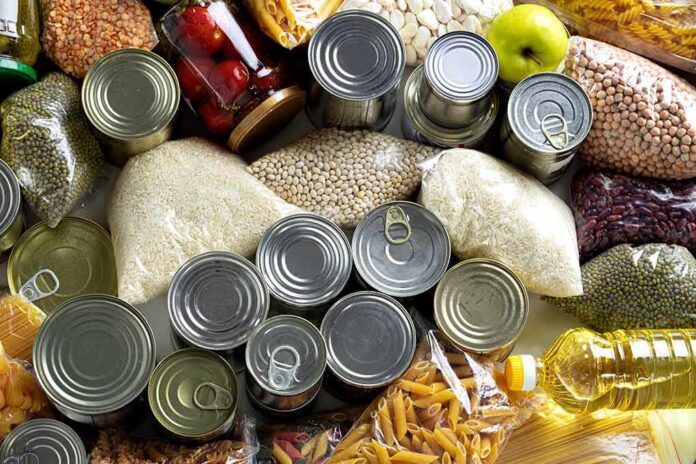
A massive French health study just tied common food preservatives to a 29% jump in high blood pressure risk and a 16% jump in heart disease risk.
Quick Take
- A study of over 112,000 French adults found preservatives linked to higher hypertension and heart disease rates.
- Researchers tracked volunteers for seven to eight years using repeated detailed diet records.
- Eight specific additives, including sodium nitrite and potassium sorbate, showed the strongest links.
- The findings appeared in the European Heart Journal, a major cardiology publication.
What The Study Actually Found
The research comes from NutriNet-Santé, a long-running French health project. Scientists followed 112,395 volunteers starting in 2009, tracking what they ate down to the ingredient level. People with the highest intake of non-antioxidant preservatives faced a 29% higher risk of developing hypertension and a 16% higher risk of cardiovascular disease, according to the published hazard ratios.
A second group of preservatives, the antioxidant type, carried its own warning sign. Those additives were tied to a 22% higher risk of hypertension among the heaviest consumers, separate from the non-antioxidant findings. The study treated these two categories differently rather than lumping all preservatives together, which matters because it shows the risk isn’t uniform across every additive on a food label.
The Additives Named In The Findings
Secondary reporting on the study points to specific compounds driving the association. Sodium nitrite, potassium sorbate, citric acid, potassium metabisulfite, rosemary extracts, and ascorbic acid all showed up in the subgroup analyses tied to higher risk. Several of these appear in everyday products like deli meats, canned goods, and packaged snacks, which means most American households likely consume them on a regular basis without a second thought.
That naming list creates a real communication problem. Citric acid and ascorbic acid sound like harmless fruit nutrients to most shoppers, yet they appear here as added preservatives in processed products, not as naturally occurring compounds in an orange. Confusing the two does nobody any favors, and it’s worth remembering this study concerns additives mixed into packaged food, not the natural acids found in fresh produce.
Why The Study Carries Real Weight
This isn’t a quick online survey or a one-time snapshot. Researchers used repeated 24-hour dietary records collected over years, which gives a far sturdier picture of actual eating habits than a single questionnaire. The outcome counts were sizable too, with 5,544 new hypertension cases and 2,450 new cardiovascular disease cases tracked across the cohort, giving the statistics real statistical muscle behind them.
The European Society of Cardiology and the American College of Cardiology both independently summarized the same core numbers, which tells you the headline findings weren’t lost in translation or exaggerated by a single news outlet chasing clicks. When separate cardiology institutions land on matching figures, that consistency adds credibility that a lone press release simply can’t provide on its own.
What This Means For Your Grocery List
Like virtually all nutrition research of this kind, the study measures association, not proof of direct cause. One brief caveat worth noting: it cannot say with certainty that the preservatives themselves, rather than the broader processed-food diet they travel in, are driving the numbers up. Still, a signal this large, from a cohort this size, deserves attention rather than dismissal, especially given how much packaged food fills the average American pantry.
The practical takeaway for families is straightforward common sense. Reading ingredient labels, favoring fresh over packaged where possible, and treating “natural” preservative claims with a skeptical eye costs nothing and could meaningfully lower long-term cardiovascular risk. Nobody needs to panic over a single hot dog, but a steady diet built around heavily preserved, shelf-stable products now has fresh evidence behind the old advice to eat closer to the source.
Expect regulators and food manufacturers to move cautiously here. Agencies typically wait for replication in other countries and populations before revisiting additive rules, and companies with a financial stake in current formulations have little incentive to rush reformulation. That leaves consumers, for now, as their own first line of defense against a problem hiding in plain sight on nearly every pantry shelf.
Sources:
mindbodygreen.com, pmc.ncbi.nlm.nih.gov, medicaldaily.com, sciencedaily.com, food-safety.com