You can trim dangerous belly fat without going on a diet, if you change what you drink, stretch your overnight fast, cut alcohol, and train with purpose.
Story Snapshot
- Exercise alone can reduce visceral fat measured by scans, even without dieting.
- Moderate to hard aerobic work beats low-intensity or strength-only plans for this goal.
- Beverage swaps, longer overnight fasts, and less alcohol can help without counting calories.
- Higher weekly exercise “dose” leads to larger visceral fat drops in trials.
What Kait Malthaner Proposes, In Plain Terms
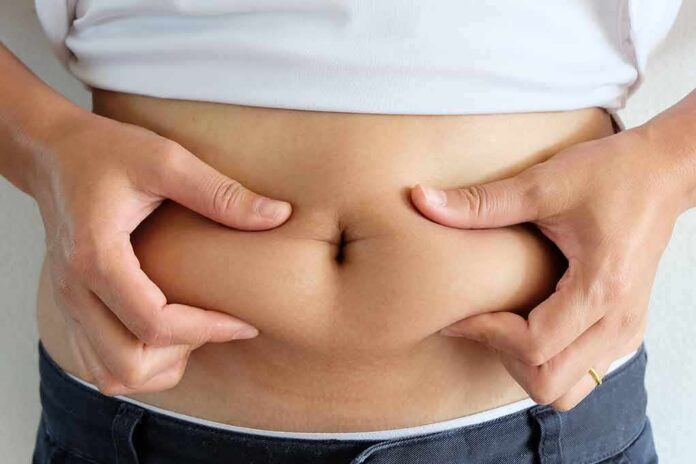
Kait Malthaner lays out a simple plan to reduce visceral fat without a classic calorie-restricted diet. She focuses on four levers: change daily drinks to lower insulin spikes, extend the overnight fast, pull back on alcohol, and train smart with targeted sessions. The hook is visceral fat, not the bathroom scale. Visceral fat wraps organs and drives higher disease risk. Scans like computed tomography or magnetic resonance imaging can show changes over weeks, even if weight barely moves.
Her angle mirrors what busy adults want: fewer food rules and more wins from habits. Drinks shift fast. Replace sugar-sweetened coffee drinks, fruit juice, and soda with water, black coffee, or unsweetened tea. Alcohol changes are simple, too. Fewer nights and fewer drinks lower empty calories and improve sleep and recovery. A longer nightly fast can be as basic as finishing dinner earlier and pushing breakfast later. None of these require weighing food or tracking points.
What High-Quality Evidence Says About Exercise And Visceral Fat
Multiple systematic reviews with imaging back the claim that exercise by itself can cut visceral fat. A landmark review found meaningful drops after about 12 weeks of training without a hypocaloric diet, with larger reductions in men than women on average. Another review of randomized trials confirmed exercise reduces visceral fat and showed a dose response. More weekly exercise energy led to more fat loss around the organs. These studies used supervised plans and measured real fat changes, not just belt notches.
Training style matters. Trials comparing exercise types tend to favor moderate to vigorous aerobic work for visceral fat loss over low-intensity cardio or strength-only plans. That does not make strength training useless. Muscle helps health, joint stability, and long-term maintenance. But if the bullseye is visceral fat, aim first at steady moderate-to-hard aerobic sessions. Add intervals when joints and fitness allow. Then layer in two short strength workouts for function and to support adherence.
How To Turn The Evidence Into A Weekly Routine
Adults who want results without a diet need a plan they can do on any week. Target four to five hours of moderate-to-vigorous aerobic work across the week to reach the energy “dose” linked with bigger visceral fat drops in trials. Break it into 45–60 minute sessions of brisk walking, cycling, rowing, rucking, or swimming. Keep most minutes at a pace where full sentences are hard to speak. Sprinkle in short, hard intervals once or twice a week if lungs and legs can handle it.
Overlay the beverage and alcohol levers. Move all daytime drinking to water, black coffee, or unsweetened tea. Save one planned drink for a social night, or skip it for a month. Close the kitchen after dinner and aim for a 12–14 hour overnight fast. This simple window reduces evening snacking and can lower average insulin exposure without a formal diet. Pair two brief strength sessions for posture, grip, hips, and core. Consistency over 8–12 weeks is the test window that trials used.
Why This “No Diet” Approach Still Works
The plan reduces visceral fat because it raises sustained energy use and trims mindless calories without food rules. Aerobic training pushes the body to use fat around organs as fuel, and the effect scales with weekly workload. Beverage swaps and fewer drinks cut high-calorie inputs that deliver little fullness. A longer nightly fast limits late eating, which often clusters ultra-processed snacks. The result is a lower insulin environment across the day with no calorie counting, and a heartier engine that burns more during and after workouts.
What To Expect And How To Judge Progress
Expect slow, steady change. Clothes may loosen before the scale budges. Waist measurement, resting heart rate, and how many minutes you can hold a brisk pace are useful checks. If you want a stricter proof, ask your clinician about body composition scans, though they are not required. The best signal is adherence: four to five weekly cardio hours, plus the drink and alcohol rules, for 12 weeks. Meta-analyses that used scans saw real shifts on that timeline without formal dieting. Keep going after week twelve to lock in gains.
Sources:
youtube.com, pmc.ncbi.nlm.nih.gov, ncbi.nlm.nih.gov