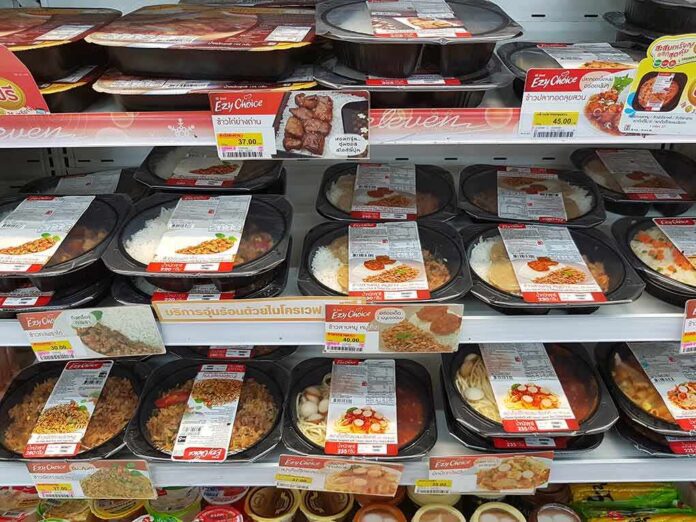
A wave of new research in 2026 shows that ultra-processed foods are linked to a long list of health problems, from childhood obesity to cancer to early death.
Story Snapshot
- Multiple 2026 studies tie ultra-processed food intake to obesity, heart disease, cancer, depression, and higher death rates.
- A Tufts University study suggests the way food is processed may hurt health on its own, separate from what’s inside it.
- The National Institutes of Health (NIH) now backs research into ultra-processed foods, showing the topic has real federal attention.
- Most evidence comes from large reviews of existing studies, not brand-new experiments, so it shows strong patterns rather than final proof.
What The New Research Actually Found
A 2026 review in PLOS One looked at teenagers and found that eating more ultra-processed food tracked closely with higher rates of being overweight or obese. Separately, a British Journal of Nutrition analysis found that people who eat more of these foods tend to have worse heart and metabolic health, plus higher odds of dying early. Together, these studies paint a picture that spans age groups, not just one slice of the population.
The concerns don’t stop at weight and heart health. A major review published in The BMJ pulled together dozens of studies and reported a higher risk of poor health outcomes tied to ultra-processed food exposure across the board. A follow-up Nutrition Reviews paper added more detail, linking these foods to lower “good” cholesterol, metabolic syndrome, cardiovascular disease, and depression. A newer Frontiers in Nutrition analysis even found a dose-response link between ultra-processed food intake and digestive system cancers, meaning the more people eat, the higher their risk climbs.
Why Processing Method Itself May Matter
Researchers at Tufts University’s Food is Medicine Institute raised a new angle in June 2026. Their study suggests it may not just be what goes into ultra-processed foods, but how factories make them, that drives some of the harm. That’s a meaningful shift. It means swapping out one bad ingredient might not be enough if the manufacturing process itself changes how food affects the body.
This idea matters for parents and grandparents watching kids grow up on packaged snacks and fast meals. A Frontiers in Nutrition review focused specifically on early-life exposure, warning that eating patterns formed in childhood carry risk forward into later health outcomes. The mortality data backs this up over time. A 2025 analysis found that higher ultra-processed food consumption tracked with higher all-cause mortality, and the risk grew step by step as intake increased.
Federal Interest Is Growing, But So Is The Debate Over Definitions
The government isn’t ignoring this. A June 2026 paper in JAMA Network Open mapped out research projects backed by the National Institutes of Health focused specifically on ultra-processed foods, showing this is now a serious federal research priority rather than a fringe topic. That kind of institutional attention typically signals that policymakers expect the evidence to keep building.
Still, honest reporting requires one caveat. Most of this evidence comes from observational studies and reviews of existing data, not controlled experiments that isolate a single cause. That means researchers have found strong, repeated patterns linking ultra-processed foods to poor health, but pinning down the exact mechanism behind every outcome is still ongoing work. The category itself is also broad, covering everything from soda to packaged bread, which means not every product inside it carries identical risk.
STUDY LINKS CUTTING ULTRA-PROCESSED FOODS TO LOWER DEPRESSION, ANXIETY
A new study says eating less ultra-processed food could help your mental health.
Researchers reported in JAMA Psychiatry that people had less depression and anxiety after reducing their ultra-processed food…— Worldwide News Network (@WorldwideNNX) September 27, 2026
For everyday families, the practical takeaway is simple even if the science is complex. The more of a person’s diet that comes from heavily processed, packaged products, the more red flags show up across nearly every major health measure researchers track. That’s not a fringe theory anymore. It’s showing up in review after review, across children, teens, and adults alike.
Sources:
youtube.com, journals.plos.org, cambridge.org, jamanetwork.com, now.tufts.edu, bmj.com, frontiersin.org, journal.ugm.ac.id