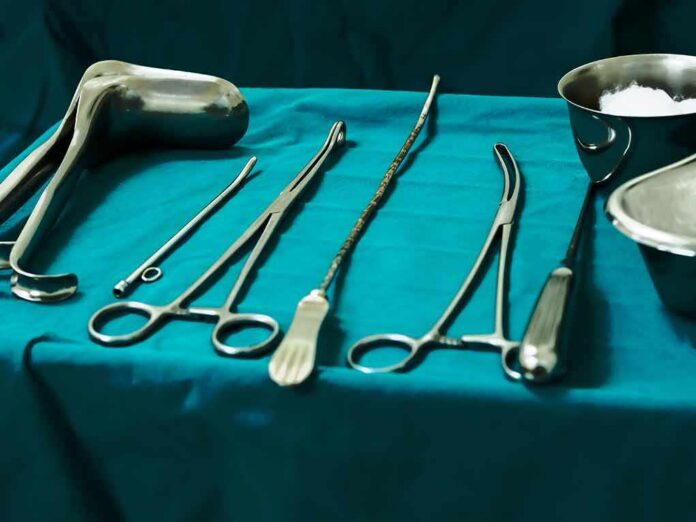
Surgeons at Mayo Clinic are now building spinal implants from titanium that match a patient’s own bones, down to the curve of each vertebra.
Quick Take
- Mayo Clinic surgeons use 3D-printed titanium implants shaped from each patient’s own CT scans.
- Doctors say the custom fit improves alignment, bone coverage, and overall spine stability.
- The process also speeds up surgery and helps doctors plan before ever entering the operating room.
- Published research backs the promise but still calls for larger, longer studies to confirm lasting results.
A Spine Implant Built For One Patient Only
Every spine curves and bends differently. That makes standard, one-size implants a tough fit for complex cases. Mayo Clinic surgeons now solve that problem with 3D printing. They take a patient’s imaging and turn it into a titanium implant shaped to match that person’s exact anatomy, not a generic template pulled off a shelf.
Dr. Joshua Bakhsheshian, a Mayo Clinic neurosurgeon, explains the appeal in simple terms. “The benefit of these is they’re custom fitted for each particular patient,” he says. He adds that the implants give surgeons “more control in terms of alignment restoration and also endplate coverage,” meaning a tighter, more stable connection between implant and bone.
From CT Scan To Surgical Table
The process starts well before surgery. A patient’s CT scan gets converted into a digital model of their spine. Engineers use that model to design an implant that mirrors the person’s unique curves and bone structure. Mayo Clinic also uses artificial intelligence to plan procedures and predict outcomes ahead of time, giving surgeons a clearer roadmap before they ever pick up a scalpel.
This planning pays off in the operating room. Mayo Clinic’s anatomic modeling program notes that patient-specific surgical guides and cutting tools can save up to two hours of operating time. Less time under anesthesia generally means lower risk and a smoother recovery for the patient. Surgeons also avoid bending rods mid-procedure since the implant already matches the planned correction.
Why Doctors Say Fit Matters So Much
A poorly fitted implant can shift, sink into bone, or fail to restore proper alignment. Mayo Clinic surgeon Dr. Ahmad Nassr notes that in complex cases, surgeons now build 3D-printed models of a patient’s spine before surgery to study the exact shape they need to correct. That preview helps avoid surprises once the procedure begins.
Research on pedicle screw guides, another 3D-printed tool, shows they cut down on screw misplacement, a common complication in spine surgery. Interbody cages built this way also include porous structures designed to encourage bone fusion over time, giving the implant a better chance of becoming a permanent, stable part of the spine.
What The Broader Research Says
Mayo Clinic’s results fit a wider pattern seen across the field. Systematic reviews of patient-specific 3D-printed spine implants report real clinical and radiographic improvement in patients. One review found that while 11 of 35 cases showed some implant sinking, only one required a follow-up surgery, a reassuring sign for a still-developing technology.
Researchers caution that most of this evidence comes from small case series rather than large randomized trials, the gold standard for proving a treatment works better than existing options. Follow-up periods in many studies remain short. That doesn’t undercut what Mayo Clinic is doing. It simply means the field is still building the long-term data to match the early clinical promise.
Regulation And The Road Ahead
The Food and Drug Administration (FDA) regulates these printed implants through the same safety pathways used for traditional medical devices, requiring manufacturers to submit testing data showing the devices are safe and effective. A separate legal provision also allows truly custom, patient-specific implants built at a doctor’s request to meet a distinct regulatory category.
Realigning the top of the spine with about 70% less force. A 3D-printed expandable titanium wedge spacer eased atlantoaxial (C1-C2) reduction in a patient-specific test model. Preclinical. https://t.co/ZO1NQZwevF pic.twitter.com/cghbnng4Ch
— 3DHEALS (@3dheals) October 8, 2026
For patients facing complex spinal surgery, the shift toward personalized implants represents a practical, common-sense improvement over generic hardware. Matching an implant to a person’s actual bones, rather than forcing their body to adapt to a standard part, reflects the kind of patient-first thinking that should guide modern medicine as the technology and research base continue to grow.
Sources:
youtube.com, newsnetwork.mayoclinic.org, mayoclinic.org, pmc.ncbi.nlm.nih.gov, link.springer.com