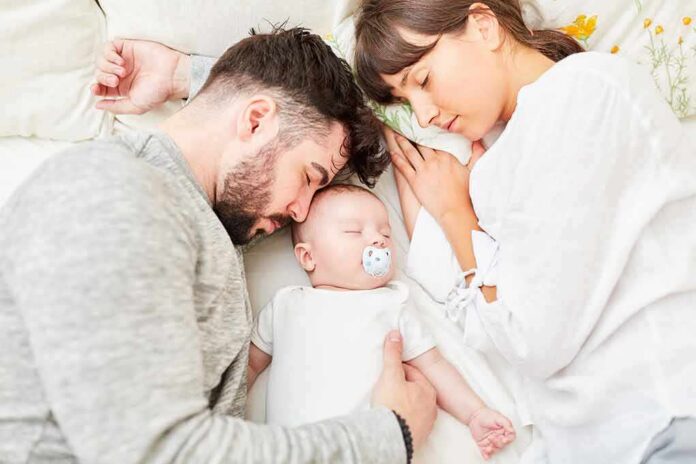
Dads who take at least two weeks off after a baby arrives end up closer to their kids years later, according to new long-term research out of Singapore.
Quick Take
- A 2025 Singapore study found two or more weeks of paternity leave linked to stronger father-child bonds and better family dynamics.
- Researchers also tied that leave to higher academic achievement and fewer behavior problems in kids ages 3 to 8.
- Older OECD data from four countries found similar patterns in father involvement and child cognitive scores.
- A Spanish study found the opposite effect for extra leave, showing the picture isn’t simple.
What The New Research Actually Found
The study, published in the Journal of Marriage and Family, followed families over several years and found that fathers who took two weeks or more of paternity leave got more involved in childcare early on. That early involvement tracked forward into closer father-child relationships and healthier overall family dynamics as the kids grew. A related 2023 study from the same research team found the same leave threshold linked to lower family conflict, higher marital satisfaction, and fewer child behavior problems.
The researchers also reported a connection between paternity leave and later academic achievement, with some of that effect running directly and some running through improved family dynamics. Kids in families where dads took leave showed fewer behavior problems between ages 3 and 8. That age range matters. It means the clearest results show up once children are already in preschool or early elementary school, not during infancy itself.
Older Data Points In The Same Direction
This isn’t the first research to find a link. A 2013 OECD report tracked families in Australia, Denmark, the United Kingdom, and the United States and found fathers who took two or more weeks of leave were more likely to stay hands-on with childcare as their kids got older. The same report found that children with highly involved fathers scored better on cognitive tests, with the strongest results showing up in the United Kingdom. Ohio State University researcher Sarah Schoppe-Sullivan has pointed to similar findings tying sustained father involvement to better peer relationships, higher intelligence scores, and more secure attachment in kids.
None of this proves paternity leave by itself rewires a baby’s brain during those first weeks home. The OECD report itself called the evidence for some outcomes, like behavior, weak even while calling the cognitive link stronger. Families who take leave often differ from families who don’t in ways that matter: steadier jobs, more income, different relationship dynamics. The leave might be a marker of a stable household as much as a cause of one.
A Study That Complicates The Clean Story
A separate study out of Spain, tracking about 5,000 children under six, found something uncomfortable for anyone wanting a simple answer. Families eligible for four extra weeks of paternity leave saw a 12-percentage-point jump in developmental delays, possibly because the extra time at home meant less use of formal childcare that researchers considered higher quality. More leave isn’t automatically better. It depends on what the leave replaces.
Paternity leave and a father’s engagement during infancy is associated with better cognitive, social, and emotional regulation outcomes for the child, writes Alvin Thomas.https://t.co/tLmfmDjGl8
— TIME (@TIME) October 10, 2026
That tension shows up in how people talk about this online too. Some see paternity leave as a basic family investment; others see a system stacked against working fathers who can’t take the time without losing ground at work. Both instincts have a point. A policy only helps kids if parents can actually afford to use it, and that access isn’t equal across jobs or income levels.
What This Means For Families And Policy
The honest takeaway is narrower than the splashiest headlines suggest. Paternity leave of two weeks or more is consistently tied to fathers staying more involved, and involved fathers are tied to better outcomes for kids later on. That’s a real, repeated finding across different countries and research teams. What it isn’t is proof that a few weeks off in the newborn stage single-handedly builds a baby’s brain. The stronger, more defensible claim is that paternity leave helps build the kind of involved, stable family life that supports kids as they grow. For readers who value strong families and personal responsibility, that’s actually the more compelling case: not a government mandate promising brain science miracles, but evidence that dads showing up early tends to mean dads showing up later too.
Sources:
time.com, onlinelibrary.wiley.com, cwlibrary.childwelfare.gov, oecd.org