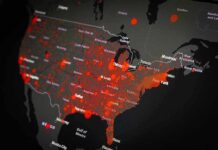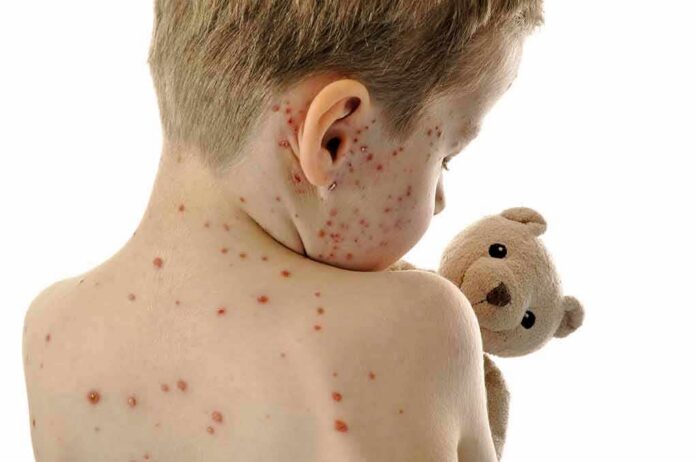
The United States has logged more than 4,850 measles cases in 2026, the worst year for the disease in 35 years, and an independent health body is now reviewing whether the country should keep its measles-free status.
Story Snapshot
- The Centers for Disease Control and Prevention (CDC) confirmed 4,852 measles cases in the U.S. as of October 29, 2026, more than double all of 2025’s total.
- The Pan American Health Organization (PAHO) is reviewing the country’s measles-elimination status, with a decision expected in November 2026.
- Kindergarten vaccination rates for measles, mumps, and rubella have dropped to 92.4%, below the 95% level experts say stops the disease from spreading.
- About 280,000 kindergartners started this school year without enough protection against measles, according to the CDC.
- Measles cases across the Americas region have jumped nearly fivefold compared to last year, adding pressure on the review.
Case Counts Hit A 35-Year High
The CDC’s measles tracking page shows 4,852 confirmed cases in the United States so far in 2026. That number has already more than doubled the 2,289 cases reported for all of 2025. The Congressional Research Service called this the highest annual U.S. total since 1991, when 9,643 cases were recorded. The surge marks a sharp break from the low, steady numbers the country had seen for decades.
Measles was declared eliminated from the United States in 2000. That status does not mean the virus never shows up. It means the country has not had a chain of continuous local spread lasting 12 months or longer. Nearly all outbreaks since then started when an infected traveler brought the virus in from overseas, then it spread among people who were not vaccinated.
Vaccination Rates Keep Falling
National kindergarten vaccination coverage for measles, mumps, and rubella fell to 92.4% during the 2025-2026 school year, down from 95.2% just six years earlier. Health experts generally say vaccination rates need to stay above 95% to stop the virus from spreading widely. The CDC says the coverage drop left roughly 280,000 kindergartners without enough protection this school year.
That national average hides big differences between communities. Some schools and counties report vaccination rates far below the 92.4% national figure, while others stay well above it. Public health researchers note that measles outbreaks tend to take hold in pockets where vaccination rates are low, rather than spreading evenly across the whole country.
International Health Body Reviewing U.S. Status
PAHO, the regional health arm of the World Health Organization for the Americas, announced it would review the United States’ measles-elimination status in November 2026. The agency said its review period covers one year starting from outbreaks that began January 20, 2025. The decision rests with PAHO’s Regional Verification Commission, a technical body that reports directly to the organization’s director rather than to U.S. health officials.
The commission’s job is to determine whether the country has let the virus spread continuously among its own population for a full year, rather than just dealing with cases brought in from abroad. Available records show PAHO scheduled the review and set its criteria. They do not yet include a final decision from the commission on the U.S. case.
Regional Surge Adds Pressure
The U.S. outbreak is not happening in isolation. PAHO reported 57,666 confirmed measles cases across 17 countries and territories in the Americas through early November 2026, a 4.7-fold jump compared with the same period in 2025. That regional spike puts more attention on how the U.S. and its neighbors are handling imported cases and whether the virus is taking hold locally.
The United States, which has all the resources, infrastructure, and historical capacity to maintain measles elimination – is instead bracing to lose its status this coming week. This will be the first time since it gained elimination status 26 years ago. https://t.co/h1oYpAmyH1
— Dr. Catharine Young (@DrCatharineY) November 7, 2026
Public health groups have pointed to the drop in vaccination rates as the main reason measles keeps finding footholds in American communities. Researchers studying the disease say the pattern echoes past U.S. outbreaks: a traveler brings the virus home, and it spreads fastest where fewer people are vaccinated. Whether this year’s numbers meet PAHO’s technical bar for losing elimination status will not be clear until the commission issues its findings.
Sources:
youtube.com, cdc.gov, paho.org, congress.gov, medicaleconomics.com