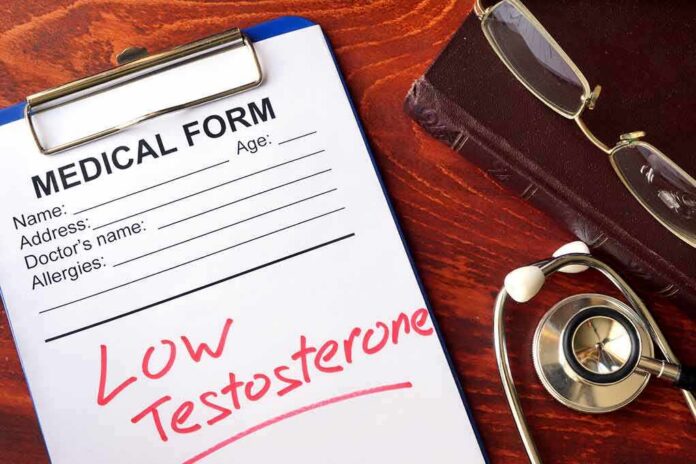
Men with rock-bottom testosterone levels face an 18% higher risk of dying from cancer than men with the highest levels, according to a massive new global study.
Quick Take
- Researchers tracked more than 26,000 men across multiple countries to study hormone levels and cancer death risk
- Men in the lowest testosterone group had an 18% higher risk of cancer death than men in the highest group
- Scientists say low testosterone may be a warning sign of poor health, not a direct cause of cancer
- Doctors still screen for prostate cancer risk before starting testosterone therapy, per current medical guidelines
What The Huge International Study Found
Scientists pooled data from more than 26,000 men worldwide to see how testosterone levels connected to cancer outcomes over time. Published in Lancet Healthy Longevity, the study compared men with the lowest testosterone readings against men with the highest. The gap was real and measurable. Men at the bottom quintile carried an 18% higher risk of dying from cancer, with a hazard ratio of 1.18.
The study did not stop at total testosterone. Researchers also looked at related hormones, including dihydrotestosterone and sex hormone-binding globulin, a protein that carries testosterone through the blood. Lower levels of these related markers showed similar patterns, strengthening the idea that something broader than a single hormone number is driving the risk.
What surprised the research team most was a twist nobody expected going in. Testosterone itself showed no clear link to whether a man developed cancer in the first place. The hormone only showed up as a signal once death from cancer entered the picture, suggesting it may track overall health decline rather than cancer formation.
Why Low Testosterone Likely Isn’t The Cancer’s Cause
An association is not the same as a cause, and good researchers know the difference matters enormously. Low testosterone often shows up alongside aging, obesity, chronic illness, and inflammation, all of which independently raise cancer death risk. The honest reading here is that low testosterone works as an early warning flag for a man’s broader health trajectory, not as a trigger that sets cancer in motion.
This caution echoes a longer debate in prostate cancer research specifically. Doctors once worried that more testosterone might fuel prostate cancer growth, based on older androgen-deprivation thinking. But newer randomized trial data, including findings following the large TRAVERSE trial, have not shown a clear rise in prostate cancer cases among carefully screened men receiving testosterone therapy over several years.
What This Means For Men Weighing Testosterone Therapy
None of this gives men a green light to chase higher testosterone numbers as a cancer-fighting strategy. Current endocrine guidelines still require doctors to check prostate cancer risk before starting therapy, then monitor it again three to twelve months later. Known or suspected prostate cancer remains a reason to avoid starting treatment altogether, regardless of how low a man’s testosterone reads on a lab report.
Large int'l study (26k+ men) found very low testosterone associated with 18% higher later cancer mortality. https://t.co/WHdFmoj1cD
That's on top of the fact that testosterone levels have dropped 50% in men of equal age over the last 50 years.
— Dr. Greg Nigh (@gnigh) November 8, 2026
Men over 40 hear a lot of noise about testosterone, from supplement ads to anti-aging clinics promising a fountain of youth. This study is a reminder that real medicine moves slower and more carefully than marketing does. A low number on a blood test deserves a conversation with a doctor, grounded in actual screening and follow-up, not a quick fix pulled from a headline or a sales pitch.