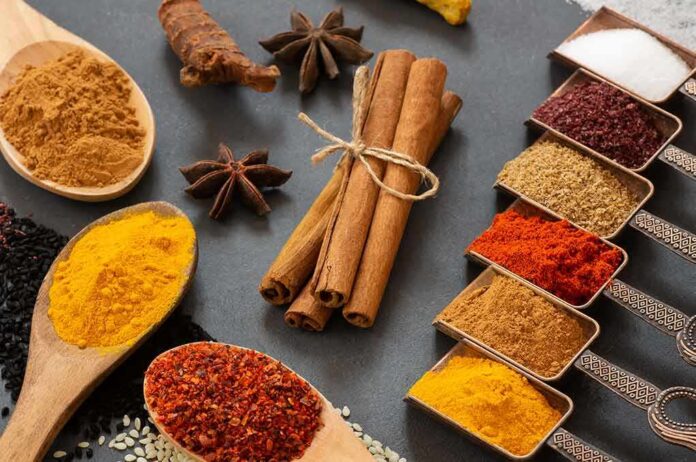
The spices sitting in your kitchen cabinet right now may be doing more than flavoring dinner — new research suggests they could be feeding the good bacteria in your gut.
Story Snapshot
- A randomized, controlled-feeding study found that adding herbs and spices to meals changed gut bacteria in adults at risk for heart disease.
- Higher spice doses enriched bacteria linked to short-chain fatty acids, compounds tied to gut and metabolic health.
- Separate research points to curcumin, the active compound in turmeric, as helpful for blood sugar control in prediabetes.
- Scientists caution that gut microbiome research is still early, with most findings not yet proven to change long-term health outcomes.
What The Spice Study Actually Found
Researchers at Penn State ran a randomized, crossover, controlled-feeding study published in the Journal of Nutrition. Fifty-four adults at elevated cardiovascular risk ate three different diets containing low, moderate, or high amounts of herbs and spices, each tested for weeks at a time. The spice blends included cinnamon, ginger, cumin, turmeric, rosemary, oregano, basil, and thyme mixed into an otherwise average American diet.
The results showed something that caught the attention of nutrition scientists. After four weeks on the higher-spice diets, participants’ gut bacteria composition shifted. The high-spice diet enriched bacteria called Agathobacter compared to the lower doses, and Faecalibacterium, a bacteria group known for producing beneficial short-chain fatty acids, also increased. Researchers even saw a dose-response pattern, meaning more spice tended to produce a bigger bacterial shift.
Short-chain fatty acids matter because they feed the cells lining your colon, calm inflammation, and may help regulate blood sugar and appetite. Study author Kristina Petersen and her Penn State team flagged this as a meaningful signal worth watching, since diet is one of the few levers people can pull daily to shape their own microbiome.
How This Connects To GLP-1 And Blood Sugar
GLP-1 has become a household term thanks to popular weight-loss drugs, but it is also a hormone your body makes naturally in the gut after eating. It signals fullness to the brain, triggers insulin release, and helps lower blood sugar after meals. Early science suggests certain gut bacteria support your body’s own GLP-1 production, which is part of why researchers are curious about spices and the microbes they feed.
Turmeric’s active ingredient, curcumin, has its own track record here. A nine-month clinical trial found that curcumin supplementation significantly lowered the number of prediabetic people who went on to develop type 2 diabetes. That is a more direct outcome than a bacteria shift, and it adds weight to the idea that specific spice compounds can influence blood sugar control, not just gut composition.
Why Scientists Say This Is Still Early Evidence
Gut microbiome science as a whole faces a well-known pattern: promising lab and short-term findings that are hard to translate into firm medical advice. Researchers across multiple expert panels note that studies vary widely in populations, diets, and lab methods, and there is still no agreed-upon definition of what counts as a “healthy” microbiome. That makes it tough to say any single food fixes gut health on its own.
The spice study itself was well designed, using a randomized crossover format stronger than typical observational diet research. But it involved just 54 people, ran for four-week periods, and measured bacterial changes rather than hard outcomes like diabetes diagnoses or heart attacks. Experts widely agree the microbiome field needs larger, longer studies before these findings become medical recommendations rather than encouraging clues.
If you have gut issues, you do not have to go straight into buying $340 worth of probiotics or fancy prebiotics.
Believe it or not, there are certain relatively cheap, easily accessible and safe spices that you can try adding to your meals that can offer meaningful support for… pic.twitter.com/8ZZQeWqso9
— George Ferman (@Helios_Movement) November 20, 2026
None of that erases the practical takeaway. Cooking with real herbs and spices like cinnamon, ginger, turmeric, and oregano costs little, carries no known downside for most healthy adults, and now has actual human trial data behind it. For readers over 40 juggling blood sugar, weight, and gut comfort, stocking the spice rack looks like a low-risk, common-sense move while bigger science catches up.
Sources:
pmc.ncbi.nlm.nih.gov, psu.edu, ncbi.nlm.nih.gov, mindbodygreen.com, pure.psu.edu, gut.bmj.com, cell.com