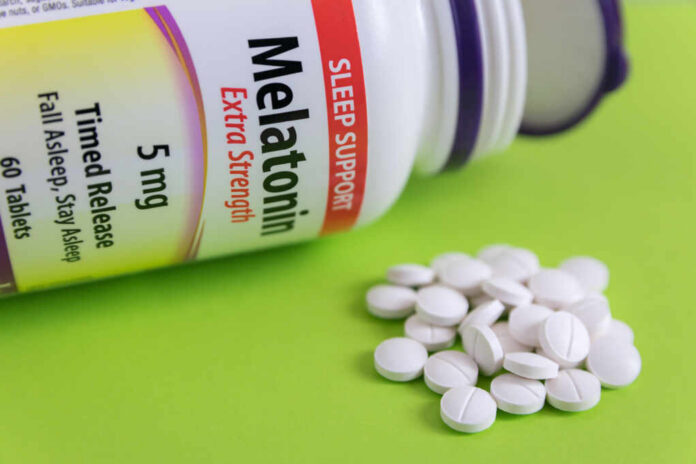
A cheap, widely available sleep supplement may be doing something inside your cells that no one expected — and night shift workers are at the center of the discovery.
Quick Take
- A new study found melatonin supplementation increased DNA repair activity in night shift workers, a group with chronically disrupted circadian rhythms.
- The finding suggests melatonin may act directly on cellular repair pathways, not just on sleep quality — a biologically meaningful distinction.
- The study has not yet been independently replicated, and the jump from “increased DNA repair activity” to “slowed biological aging” is not yet scientifically established.
- The research fits a broader pattern of biomarker studies being amplified into anti-aging headlines before the underlying evidence fully supports that framing.
Why Night Shift Workers Make the Perfect Test Case
Night shift workers are essentially a living laboratory for what happens when your body’s internal clock is forced to run backward. Disrupted circadian rhythms don’t just make you tired — they generate measurable cellular stress, including oxidative damage to DNA. Researchers studying melatonin in this population aren’t chasing a vague wellness outcome. They’re targeting a specific, high-risk group with a documented biological problem and testing whether a supplement can intervene at the cellular level.
That specificity matters enormously. Most supplement research fails because it tests a general population with no clear mechanism of action. Here, the logic chain is coherent: disrupted sleep suppresses melatonin production, melatonin has known antioxidant properties, oxidative stress damages DNA, and night shift workers experience all of this in concentrated form. The question the study is actually asking — does restoring melatonin increase DNA repair activity in this group — is a tightly scoped, scientifically reasonable question.
What the Study Claims and Where the Evidence Actually Stops
The reported finding is that melatonin supplementation increased DNA repair activity in night shift workers. That is a meaningful biomarker result if the assay, sample size, and controls hold up under scrutiny. What it is not, at least not yet, is proof that melatonin slows biological aging. DNA repair activity and biological age are related but distinct measurements. A biomarker shift tells you something changed in the right direction. It does not tell you whether that change translates into years of life, reduced disease risk, or a measurably younger biological age on validated epigenetic clocks like DunedinPACE or PhenoAge.
The study details available from secondary reporting do not include sample size, randomization procedures, blinding, or effect size. Those omissions are not a reason to dismiss the finding, but they are a reason to hold it loosely. A small, unblinded trial with a promising biomarker result is a starting point, not a conclusion. Independent replication in a separate shift-worker cohort, using the same assay and a preregistered primary endpoint, is what would move this from interesting to actionable.
The Hype Pattern Is Predictable and Worth Naming
This story follows a well-worn script in longevity research. A study finds a statistically significant change in a biological marker. A science news outlet frames it as a “surprising new benefit.” Social media amplifies the headline. By the time the finding reaches most readers, the careful language of “increased DNA repair activity” has quietly become “melatonin slows aging.” A parallel example is visible right now in research linking arts engagement and physical activity to slower epigenetic aging, where monthly cultural participation was associated with biological ages roughly 0.8 years lower than infrequent participants. [2] That’s a real signal worth investigating — but it is not the same as proving that museum visits add years to your life.
The same compression is happening with melatonin. The underlying biology is genuinely interesting. Melatonin acting on DNA repair pathways rather than just sleep architecture would be a significant finding. But the promotional framing of early biomarker data as proof of an anti-aging effect is a pattern that has burned readers before, across resveratrol, nicotinamide mononucleotide, and a long list of other compounds that looked transformative in early studies and then stalled or failed in rigorous follow-up trials. Healthy skepticism here is not contrarianism — it is pattern recognition. [1]
What Would Actually Confirm This Finding
Three things would meaningfully strengthen the melatonin-DNA repair claim. First, the full journal article needs to be examined for preregistration, primary endpoint designation, and assay methodology. If DNA repair activity was the prespecified primary outcome, the finding carries far more weight than if it was a secondary or exploratory result. Second, an independent research group needs to replicate the trial in a separate shift-worker population using the same dose, timing, and biomarker assay. Third, and most importantly, a longitudinal study measuring validated epigenetic aging clocks before and after supplementation would determine whether the repair activity signal translates into a measurable change in biological age — the outcome that actually matters for human health. [3]
The Bottom Line on Melatonin Right Now
Melatonin is inexpensive, widely available, and has a reasonable safety profile at standard doses. If you are a night shift worker dealing with chronic sleep disruption, the existing evidence on melatonin for circadian alignment already gives you a rational basis for discussing it with a physician. The DNA repair finding adds a potentially important new dimension to that conversation — but it does not yet justify treating melatonin as a proven anti-aging intervention. The biology is plausible. The early signal is intriguing. The evidence base is still thin. That combination deserves genuine scientific follow-up, not a supplement aisle stampede.
Sources:
[1] Web – Repairing DNA damage: Scientists discover a surprising new benefit of …
[2] Web – Engaging with the arts linked to slower aging at the biological level
[3] Web – Arts engagement linked to slower biological ageing, study says