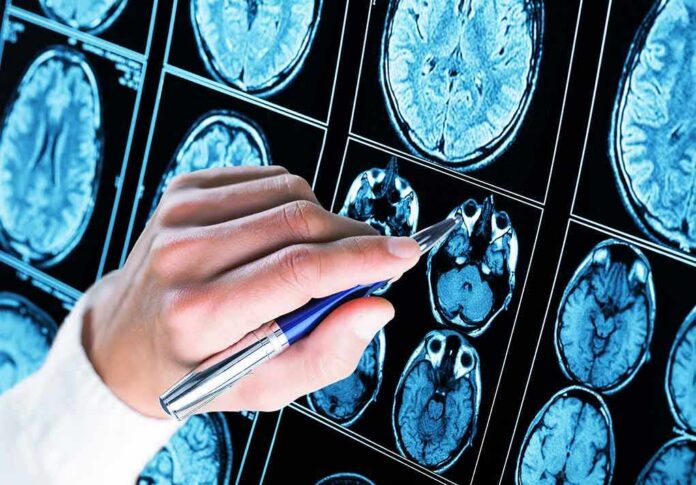
Scientists have found a hidden immune command post built right into human and mouse skull bone, and it may fight brain cancer before the rest of the body even notices something is wrong.
Quick Take
- Washington University researchers discovered lymph node-like immune structures inside skull bone marrow in mice, a first-of-its-kind finding.
- These structures reacted to brain tumors faster than the body’s distant lymph nodes, acting like an early warning system.
- The skull sits close to the brain and connects to it through special channels, letting immune cells respond quickly to danger signals.
- Separate studies show glioblastoma, the deadliest brain tumor type, can also disrupt and reshape this same skull marrow immune system.
A Security Center Hiding In Plain Sight
Doctors have studied bone marrow for over a century, mostly for how it makes blood cells. Nobody expected to find something resembling a lymph node tucked inside skull bone. Washington University School of Medicine researchers now say they found exactly that in mice, describing organized immune cell clusters that look and act like miniature security checkpoints for the brain.
Lymph nodes normally sit far from the brain, in the neck, armpits, and groin, filtering out threats slowly over time. The skull structures skip that delay entirely. In mice with brain cancer, these skull-based immune hubs picked up on tumor signals and reacted before any distant lymph node even registered a problem. That speed advantage is the heart of why this discovery matters.
Why Location Right Next To The Brain Changes Everything
The brain has long been treated as a fortress the immune system can barely reach, protected by a tough barrier that keeps most blood cells out. But researchers have increasingly found that the skull bone marrow connects directly to the brain’s outer lining through small vascular channels, letting immune cells move back and forth and sample fluid from around the brain constantly.
That direct connection means skull marrow is not just nearby storage for immune cells. It works more like a forward operating base, positioned to sense trouble in the brain almost the moment it starts. Cerebrospinal fluid, the liquid that cushions the brain, flows toward this marrow and carries brain-derived signals straight to it, feeding information to immune cells stationed there.
Brain Tumors Fight Back Against Their Own Watchdogs
Glioblastoma, the most aggressive and deadly form of brain cancer, does not sit quietly while the skull’s immune hub tries to respond. Separate research found that glioblastoma tumors actively damage the skull bone overlying them and scramble the immune cell makeup inside that marrow, expanding some cell types while wiping out others needed for a strong defense.
That tumor-driven disruption included a drop in certain B-cell types, the immune cells responsible for producing antibodies, alongside a surge in neutrophils, cells linked more to inflammation than precise targeting of cancer. In other words, the tumor appears to sabotage the very watchtower built to catch it early, turning a potential advantage into a weakened, disorganized response.
What This Could Mean For Future Treatment
Researchers are not stopping at description. A separate research effort is specifically studying whether skull bone marrow can serve as a local source of anti-tumor immune cells for glioblastoma patients, an approach that would essentially recruit the skull’s own defenses into targeted cancer therapy. That project, based at a University of California research center, treats the skull marrow discovery as a starting point for real treatment strategies, not just a lab curiosity.
Scientists have discovered hidden "immune hubs" inside the skull that act as rapid first responders for the brain. This discovery could transform how we treat Alzheimer’s, brain cancer & neurodegenerative diseases!
🔗 https://t.co/yq6XMpB0Y6#neuroscience #brainhealth pic.twitter.com/PxQ0vA1EGT
— ACSR (@ACSRbiobank) September 16, 2026
This is mouse research, and mice are not people, so scientists still need to confirm how closely human skull marrow mirrors what was found in these experiments. Even so, the location, speed, and organization of these immune hubs give researchers a genuinely new target to study, one sitting quite literally inches from the tumors doctors have struggled to treat for decades.
Sources:
sciencedaily.com, medicine.washu.edu, earth.com, en.haberler.com, nature.com, thebraintumourcharity.org