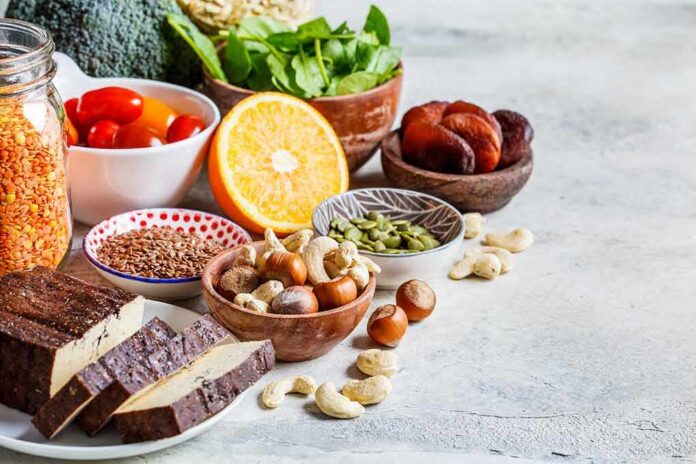
Eating more plants does not automatically mean you age better, but eating the right plants might cut your risk of frailty by nearly a quarter.
Quick Take
- A large peer-reviewed study found a healthful plant-based diet lowered frailty risk, while an unhealthful plant-based diet raised it.
- The healthful pattern means fruits, vegetables, whole grains, nuts, and legumes. The unhealthful pattern means juices, refined grains, and sugary drinks.
- Multiple studies across different countries found the same pattern, including a UK Biobank analysis and a Chinese longevity survey.
- These are observational studies. They show a strong link, not proof that changing your diet will change your outcome.
What The Research Actually Found
Researchers behind the study “Association between the quality of plant-based diets and risk of frailty” tracked people over time and compared diet quality to frailty outcomes. People in the highest group for healthful plant eating had a 23 percent lower risk of frailty compared to the lowest group. The study also found a dose effect. Every 10-point increase in healthful plant score came with a 15 percent drop in frailty risk.
That same study found the opposite effect for unhealthful plant-based eating. More refined grains, juices, and sugar-sweetened beverages tracked with higher frailty risk, not lower. This is the detail that often gets lost. A diet can be entirely plant-based and still work against you if it leans on processed carbs and sugar instead of whole foods.
Other Studies Point The Same Direction
This is not a one-study finding. A separate analysis of older adults living independently found people with higher healthy plant-food intake had dramatically lower odds of frailty, while those leaning on unhealthy plant foods had more than double the odds. A UK Biobank study tracking a massive group of adults found nearly identical results, with healthful plant eaters showing 38 percent lower relative risk and unhealthful plant eaters showing 61 percent higher relative risk.
A cohort study built from the Chinese Longitudinal Healthy Longevity Survey backed up the same basic shape, even among a very different population with different food habits. Higher healthful plant-based index scores tracked with lower frailty hazard. Higher unhealthful scores tracked with higher frailty hazard. When four separate research teams working with different populations and different data sets land on the same direction, that consistency means something.
What This Does Not Prove
None of these studies ran a controlled experiment where researchers assigned people a diet and watched what happened. They are observational. That means healthier eaters may also exercise more, smoke less, weigh less, or have better access to health care, and those factors can tangle up with the diet signal itself. Nutrition scientists have flagged this exact problem for years, noting that confounding and measurement error are persistent challenges across the field.
The outcome measured here is frailty, not lifespan, not cognitive decline, not a blood test of biological age. A diet that lowers frailty risk is not automatically proven to add years to your life or sharpen your mind. Readers should take the frailty findings seriously on their own terms, without stretching them into broader claims about aging that the studies never tested.
The Practical Takeaway For Readers Over 40
The real message buried in all this data is refreshingly simple and very unsexy: quality beats category. Calling something “plant-based” tells you almost nothing useful by itself. A diet built on vegetables, whole grains, nuts, and legumes behaves very differently in these studies than a diet built on fruit juice, white bread, and soda, even though both could technically be called plant-based.
For anyone over 40 thinking about long-term mobility and independence, the actionable point is to swap refined and sugary plant foods for whole, minimally processed ones, rather than simply cutting meat. The studies consistently reward whole-food quality over the mere absence of animal products, and that distinction matters more than any slogan on a cereal box.
Future research aimed at randomized trials, biomarker tracking, and food-substitution analysis could settle whether these associations reflect direct cause and effect. Until then, the honest summary stands: eating more whole plant foods tracks with lower frailty risk, and loading up on processed plant foods does the opposite, across several independent studies spanning different countries and populations.
Sources:
mindbodygreen.com, onlinelibrary.wiley.com, pmc.ncbi.nlm.nih.gov, nature.com