Dry mouth isn’t just an annoying thirst you can fix with a sip of water. Federal health researchers say more than 400 common medicines can shut down saliva production, and the condition can also signal diabetes, cancer treatment damage, or an autoimmune disease.
Quick Take
- Dry mouth, known medically as xerostomia, affects roughly one in five to one in three older adults, according to recent research.
- More than 400 medications can reduce saliva, the National Institute of Dental and Craniofacial Research reports.
- Dentists recommend water, sugar-free gum, and prescription-strength fluoride to protect teeth when saliva drops.
- Sjögren’s disease is one of several causes, alongside diabetes, cancer treatment, and nerve injury.
What Causes A Parched Mouth
Dry mouth is not one disease. It is a symptom with many possible triggers. The National Institute of Dental and Craniofacial Research lists medications as the top cause, but it also points to Sjögren’s disease, diabetes, HIV and AIDS, cancer treatment, and nerve damage in the head or neck as contributors. That range matters because the right fix depends entirely on what is causing the problem in the first place.
Dental hygienists and other online creators often walk viewers through these causes in short videos, breaking down a confusing medical topic into plain language. That kind of explainer content lines up with the government’s own guidance, which treats dry mouth as a symptom tied to a wide list of possible root problems rather than a single disease with one fix.
Why Saliva Matters More Than You Think
Saliva does more than keep your mouth comfortable. It washes away food, neutralizes acid, and helps prevent cavities and gum disease. When saliva flow drops, the risk of tooth decay climbs fast, which is why dental groups treat dry mouth as a dental emergency in slow motion rather than a minor annoyance.
Research on how common this problem actually is varies widely depending on how studies define and measure it. A global review found dry mouth in about one in five older adults, while a separate meta-analysis of more than 170,000 people put the pooled rate closer to one in three. Either way, it is far from rare.
The Daily Fixes Dentists Actually Recommend
Government dental guidance keeps the self-care advice simple. Drink plenty of water throughout the day. Chew sugar-free gum or suck on sugar-free lozenges to stimulate what saliva glands remain active. Avoid tobacco and alcohol, both of which dry out oral tissue further and raise the risk of complications.
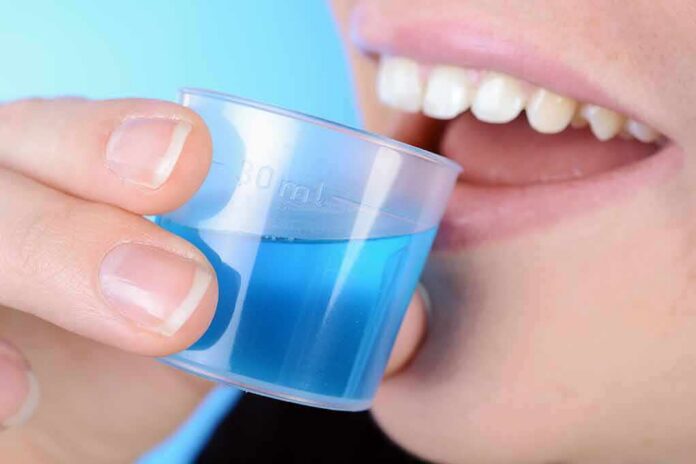
For people at high risk of cavities because of chronic dry mouth, the American Dental Association points to daily prescription-strength fluoride as a key defense, including gels with 0.4% stannous fluoride or 1.1% sodium fluoride. Saliva substitutes and specialized rinses can also help keep the mouth moist between meals and overnight, according to both dental and medical guidance.
When Dry Mouth Signals Something Bigger
Sometimes dry mouth is the first sign of a larger medical issue. Sjögren’s disease, an autoimmune condition that attacks moisture-producing glands, is one of the more serious possibilities, but it sits alongside diabetes, cancer treatment side effects, and nerve injury on the list of recognized causes. That is why health officials recommend seeing both a dentist and a physician rather than assuming the cause before getting checked out.
A doctor may review medications for ones that reduce saliva, consider adjusting dosages, or discuss saliva-stimulating prescriptions depending on what is driving the problem. Treating the surface symptom without addressing an underlying disease like Sjögren’s or diabetes leaves the real issue unmanaged, even if the mouth feels temporarily better.
Managing It Long Term, Not Curing It Overnight
None of the government or professional dental guidance describes a permanent, one-time cure for chronic dry mouth. The approach is management: treat the cause when possible, relieve symptoms daily, and protect teeth from the extra decay risk that comes with reduced saliva. For conditions like radiation damage to salivary glands or long-term autoimmune disease, that management can be a lasting routine rather than a finish line.
That is good news for anyone frustrated by quick-fix promises online. Practical daily habits, backed by real dental science, can make a tangible difference in comfort and tooth protection. Pairing those habits with an honest medical workup for the underlying cause gives people the best shot at actually feeling normal again, not just temporarily less thirsty.