The most practical Alzheimer’s headline in years isn’t about a designer drug at all—it’s about a molecule your body already makes, and then quietly loses as you age.
Quick Take
- NUS researchers reported that calcium alpha-ketoglutarate (CaAKG) restored key memory processes in Alzheimer’s disease models.
- CaAKG appears to support synaptic plasticity and long-term potentiation, the brain’s “save button” for learning.
- The study ties Alzheimer’s risk to aging biology, not just disease-specific targets, which could widen prevention strategies.
- Related research suggests memory loss tracks with broader brain shrinkage, reinforcing the case for earlier, whole-brain protection.
CaAKG puts aging biology in the Alzheimer’s crosshairs
National University of Singapore scientists focused on calcium alpha-ketoglutarate, or CaAKG, because it sits at an awkward intersection: it’s normal, it’s natural, and it declines with age. Their January 2026 report connected that decline to familiar Alzheimer’s trouble spots—weak synapses, poorer learning signals, and failing cellular housekeeping. The hook isn’t that CaAKG “cures” anything; it’s that it may help the brain keep its footing before it slips.
That framing matters for anyone over 40 who has watched a parent fade and wondered when “normal aging” stops and something darker starts. Alzheimer’s research has often chased plaques, tangles, and late-stage symptoms. NUS put the spotlight on upstream mechanics: how neurons strengthen connections, how they tag experiences for later recall, and how they clear internal junk. If the mechanics stay healthy longer, the theory goes, the cliff edge may move farther away.
Synapses, LTP, and the brain’s fragile ability to “lock in” a memory
Memory isn’t stored like a file in a cabinet; it’s stored like a habit in a network. Long-term potentiation (LTP) is the best-known laboratory measure of that network strengthening—repeated activity makes a synapse more responsive, so the next signal travels faster and more reliably. The NUS team reported that CaAKG improved impaired LTP in Alzheimer’s models, pointing to a concrete mechanism rather than a vague wellness claim.
They also described improvements tied to synaptic plasticity and “synaptic tagging,” a process that helps the brain decide which experiences deserve to stick. People feel that decision in daily life: the name you can’t recall, the appointment you swear you wrote down, the story you heard yesterday that evaporates by lunch. Those aren’t just annoying moments; they’re the outward symptoms of tiny failures in reinforcement that can compound over years.
Autophagy: the cleanup crew that gets slower with age
CaAKG’s appeal isn’t limited to synapses. The NUS work also emphasized autophagy, the cell’s internal cleanup program. Neurons are long-lived cells; they can’t afford decades of clutter. When autophagy runs well, damaged proteins and worn-out components get packaged and removed. When it slows, the neuron’s internal environment becomes noisier and more error-prone. Restoring cleanup doesn’t sound glamorous, but it’s the kind of unsexy maintenance that conservative-minded common sense respects.
This is also where readers should keep their guard up. “Boosting autophagy” has become a trendy phrase in supplement marketing, and marketers love to sprint ahead of evidence. The NUS findings are preclinical, which means they inform possibility, not a purchase decision. The responsible takeaway is narrower but still compelling: a molecule tied to everyday metabolism showed measurable effects on memory-related biology in models of Alzheimer’s impairment, and that is a stronger signal than wishful thinking.
Why “brain-wide” aging changes make a single-target fix look naïve
A separate January 2026 mega-analysis reported that memory decline aligns with shrinkage across the brain, not merely the hippocampus. That’s more than a technical detail; it’s a warning label. If multiple regions drift downward together, a miracle bullet aimed at one pathway should not be the default expectation. Whole-brain vulnerability makes the case for broad, early interventions—metabolic support, lifestyle leverage, and layered prevention—stronger than the familiar late-stage scramble.
That doesn’t mean CaAKG becomes the new universal answer. It means the research agenda looks smarter when it targets aging processes that touch many systems at once. Geroscience—treating aging biology as a root risk factor—fits the moment because it aligns with what families see: cognition rarely collapses in isolation. Sleep gets worse, mobility narrows, social life shrinks, medications pile up, and then memory starts to slide faster. Systems fail together, so protection likely needs to be systemic too.
What to do with this information without falling for hype
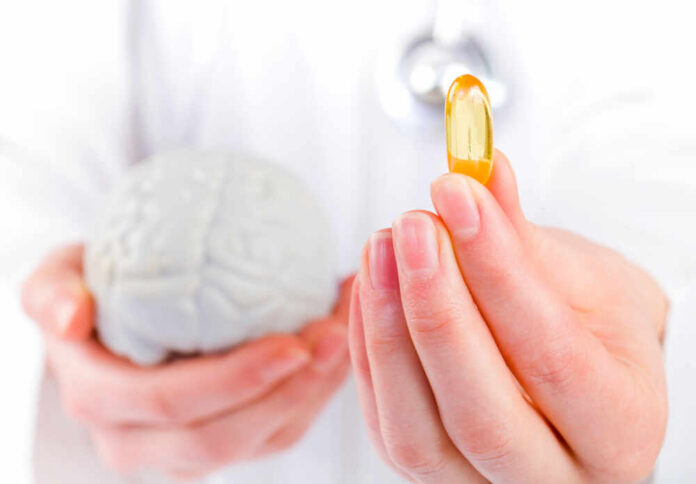
CaAKG already exists in the supplement marketplace, which creates a predictable temptation: self-experiment now, ask questions later. Caution is the adult move. The NUS results are not a human outcomes trial, not a dosing guide, and not proof of long-term safety in older adults with complex conditions. The more useful application is strategic: treat this as a signal that metabolism and brain resilience connect, then double down on proven basics that also support plasticity.
That “boring” list keeps winning because it composes well with nearly every promising intervention: consistent exercise volume, protecting sleep, managing cardiovascular risk, and maintaining purpose and engagement. Research on SuperAgers, for example, points toward resilience signatures tied to neuron growth, reinforcing the idea that brains can stay more youthful than their birth certificates. CaAKG adds one more intriguing piece: the aging body’s own chemistry might be nudged toward maintenance rather than decline, if human studies back it up.
Sources:
A natural aging molecule may help restore memory in Alzheimer’s
Widespread brain shrinkage linked to accelerating memory loss
Rejuvenation Roundup: January 2026
SuperAgers’ brains have a resilience signature and it’s all about neuron growth
SuperAgers make twice as many new neurons as peers
Research summaries: Purpose and cognition
26 research-backed tips for aging well in 2026