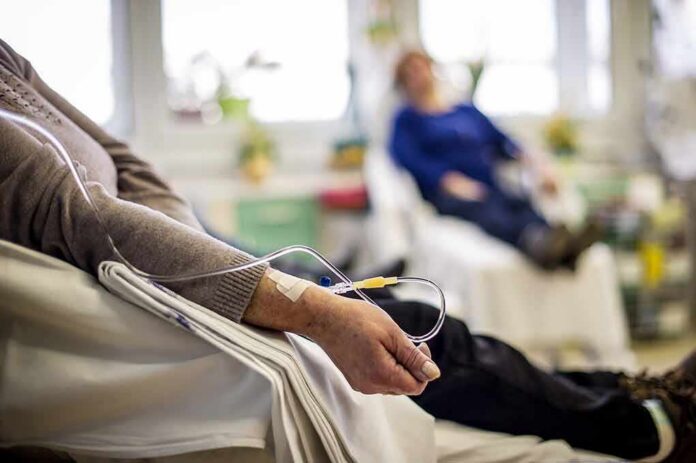
Doctors and researchers are now testing whether skipping meals around chemotherapy sessions can actually help cancer patients get through treatment with fewer side effects.
Quick Take
- Fasting before or during chemotherapy is being studied as a possible way to ease side effects, not as a cancer cure.
- A major 2023 review found no proof that fasting reduces chemotherapy toxicity, nausea, or blood-count problems.
- Lab studies suggest fasting may starve tumor cells while protecting healthy ones, but human trials have not confirmed this.
- Oncology nutrition experts warn fasting can worsen muscle loss and malnutrition in already weakened patients.
What The Research Actually Shows So Far
The idea behind fasting during cancer treatment comes from a simple theory. Healthy cells can handle short-term calorie deprivation better than cancer cells can, based on how tumors process energy. Some researchers believe this difference could let chemotherapy hit tumors harder while sparing normal tissue. That theory has pushed scientists to test real fasting protocols in actual patients instead of just lab animals.
A 2023 systematic review pooled data from multiple clinical trials testing fasting during chemotherapy. The results showed moderate to high quality evidence, but the evidence did not support fasting’s benefit. Fasting patients did not have less nausea, vomiting, fatigue, or blood toxicity compared to patients eating normally. That is a meaningful finding, because it directly tested the claim rather than just theorizing about cell biology.
Other reviews looking at fasting-mimicking diets, a gentler approach that lowers calories without full fasting, found more encouraging signals. Some studies link these diets to slower tumor growth, less spread of cancer, and changes in inflammation and immune activity when combined with standard treatment. But researchers caution these studies were often small, lacked proper comparison groups, and carried a high risk of bias.
Why Doctors Are Not Ready To Recommend It
One randomized trial called the DIRECT trial tested fasting-mimicking diets in breast cancer patients getting chemotherapy. It found no improvement in how well tumors responded to treatment and no reduction in side effects when researchers analyzed all enrolled patients as intended. Results like this matter more than smaller feasibility studies because they test the real-world effect on patient outcomes, not just whether people can tolerate the diet.
A German nutrition organization reviewed the available clinical trials on fasting during chemotherapy and reached a cautious conclusion. The group stated that no recommendation for fasting during chemotherapy can currently be made, citing unproven benefits and real risks. Those risks include malnutrition, missing micronutrients, and weight loss, all of which can make chemotherapy harder on the body rather than easier.
Cancer treatment already puts patients at risk for sarcopenia, a serious loss of muscle mass. Reviews warn that fasting could make this worse, especially in patients who are already underweight or nutritionally fragile going into treatment. Doctors treating these patients must weigh any theoretical benefit from fasting against a very real danger of weakening a body that needs strength to fight through treatment.
What Comes Next For Patients And Doctors
Broader reviews of time-restricted eating, a less extreme form of fasting, report that patients can tolerate it and some may see quality of life improvements. Researchers still say the number of studies and patients involved remains too small to draw firm conclusions about cancer outcomes. Guideline-focused literature agrees that no reproducible survival benefit has been established yet for any fasting approach in cancer care.
The path forward likely runs through larger, better-designed trials that track specific cancer types, fasting methods, and patient nutrition status separately rather than lumping them together. Until those trials produce consistent results, doctors are treating fasting as an open question worth studying, not a treatment ready for the clinic. Patients considering it should talk with their oncology team first, given the real risk of malnutrition during an already demanding fight.
Sources:
nutritionfacts.org, ncbi.nlm.nih.gov, pmc.ncbi.nlm.nih.gov, ernaehrungs-umschau.de, europepmc.org