An 80-year-old Tampa woman has become Florida’s first confirmed dengue death of 2026, a grim milestone in what health officials call the state’s worst local outbreak in decades.
Story Snapshot
- Florida health officials confirmed Gay Small, 80, of Tampa died September 4 from dengue infection with septic shock and multi-organ failure.
- Hillsborough County remains the epicenter, with case counts climbing past 190 statewide this year, already topping the previous 2023 record of 186 cases.
- Hillsborough, Pasco, and Pinellas counties declared local states of emergency as mosquito-borne illness spread through the Tampa Bay region.
- Experts say warmer, wetter weather is helping disease-carrying mosquitoes multiply and expand their range across the country.
What Happened to Gay Small
Gay Small, an 80-year-old Tampa resident, died on September 4 at Tampa General Hospital. Her death certificate listed dengue infection alongside septic shock and multi-organ failure as causes of death, according to reporting from the Tampa Bay Times. The Florida Department of Health confirmed on September 19 that her death marked the state’s first dengue fatality of the year, following weeks of investigation into whether her illness was linked to the virus.
Health officials had flagged the case earlier in September, saying they were actively investigating a Hillsborough County death possibly tied to dengue while case totals in the county sat near 95. Within weeks, that number climbed past 130, then 170, as surveillance teams reclassified more infections as locally acquired rather than travel-related.
Hillsborough County Sits at the Center of the Surge
Hillsborough County accounts for the overwhelming majority of Florida’s dengue cases this year, with health officials describing it as the epicenter of the outbreak. Statewide, confirmed infections have surpassed 190, making 2026 Florida’s second-largest dengue year on record, behind only the 186 locally acquired cases reported in 2023. Since July, 209 Floridians have been hospitalized with dengue fever, far more than any other state has recorded.
The outbreak’s concentration in Tampa Bay marks a shift from past patterns. Florida’s dengue clusters have historically centered in South Florida, but this year’s numbers show a new hotspot further north, according to public health experts tracking the spread.
Counties Respond With Emergency Declarations
Hillsborough, Pasco, and Pinellas counties each declared local states of emergency as case counts rose through September. The declarations triggered expanded mosquito-control efforts, including aerial spraying, ground treatments, and increased trapping to identify infected mosquito populations. County officials coordinated closely with the state health department to track new cases and target spraying in neighborhoods with confirmed local transmission.
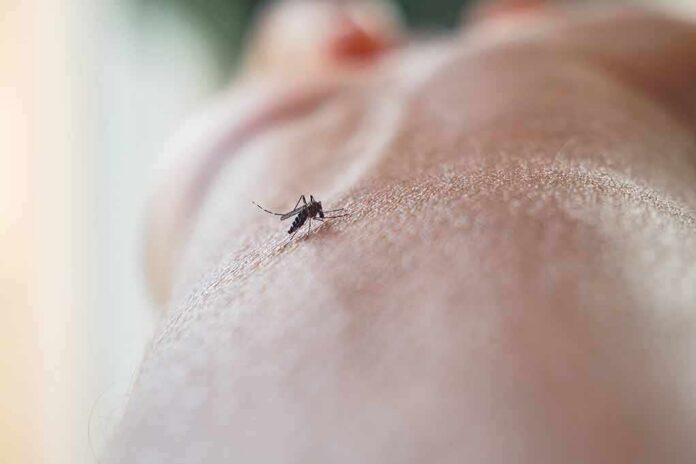
Dengue spreads through Aedes mosquitoes, which thrive in warm, wet conditions. Health officials and researchers say this year’s unusually heavy rain and heat allowed mosquito populations to multiply rapidly, setting the stage for the outbreak’s rapid local spread. Outbreaks typically begin when an infected traveler returns home and is bitten by a local mosquito capable of carrying the virus onward.
Florida’s Long History With Dengue
Dengue is not new to Florida. The state recorded a major epidemic in 1934 that produced more than 1,600 cases across Miami, Tampa, and other populated areas. Modern outbreaks resurfaced in Key West between 2009 and 2010, marking the first locally acquired dengue cases in the continental United States outside the Texas border region since 1945. This year’s cluster fits that recurring pattern: concentrated local transmission in one geographic pocket rather than even spread statewide.
Florida just recorded its first dengue death in a century, and the virus behind it has a feature almost nothing else in nature has. Surviving your first infection is the single biggest risk factor for dying from your second.
Dengue comes in four versions. When you beat one, your… https://t.co/cjyACU6hnn
— Aakash Gupta (@aakashgupta) September 30, 2026
What Researchers Say About the Road Ahead
Infectious disease researchers call this year’s outbreak a warning sign rather than a one-time event. A Northeastern University researcher who has studied dengue for two decades said this is the most locally acquired cases Florida has ever recorded. He noted dengue has not yet established a permanent foothold in the continental United States, a distinction that matters for how officials respond going forward. Experts tie the growing mosquito range to shifting climate patterns that favor longer breeding seasons.
For now, state and county health officials continue surveillance and spraying efforts while urging residents to eliminate standing water and use mosquito repellent. The death of Gay Small, officials say, underscores why they treat every confirmed local case as a public health priority rather than a routine seasonal nuisance.
Sources:
abcnews.com, heraldtribune.com, wusf.org, washingtonexaminer.com, cnn.com, patch.com, news.northeastern.edu, apnews.com, nbcnews.com, cdc.gov