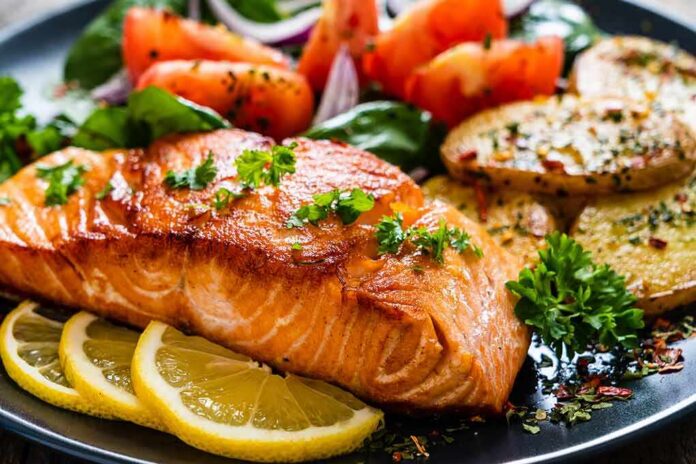
Fish might be the single easiest food swap that actually moves the needle on your health, and a new recipe roundup gives men three simple ways to start eating more of it.
Quick Take
- Men’s Health published a recipe guide on August 24 pushing readers to eat more fish through three flavor-packed dishes.
- Decades of large studies link higher fish intake to lower risk of heart disease and early death.
- The benefits show up most clearly for heart and overall survival, not for every health condition.
- Simple weeknight recipes remove the biggest excuse people give for skipping seafood: not knowing how to cook it.
A Practical Push To Get More Fish On Your Plate
Men’s Health released “How to Eat More Fish: 3 Flavor-Packed Seafood Recipes” on August 24, framing seafood as a health-forward choice that does not require culinary school skills. The piece leans on straightforward cooking steps, like blending vegetables and broth into a smooth soup, to make fish feel approachable instead of intimidating.
The timing matters. Most American men do not hit the recommended two servings of fish per week, and a recipe that removes guesswork can be the difference between good intentions and an actual dinner plan. Men’s Health has built an entire library around this idea, from high-protein fish tacos to fat-loss-friendly salmon dishes.
What The Science Actually Shows About Eating More Fish
This is not just magazine talk. A large umbrella review of dozens of studies found that every extra 100 grams of fish eaten per day was tied to a 25 percent lower risk of dying from cardiovascular disease and an 8 percent lower risk of dying from any cause. Those are not small numbers for something as simple as changing what is on the dinner plate twice a week.
Other major reviews back this up. One meta-analysis found the highest fish eaters had a 6 percent lower risk of death overall compared to the lowest eaters, with people eating about 60 grams of fish daily seeing an even bigger drop in heart-related deaths. A separate analysis pegged the sweet spot even higher, showing that eating fish five or more times a week cut coronary heart disease deaths nearly in half compared to rarely eating it.
Where The Evidence Gets More Complicated
Fish is not a cure-all, and honest reporting on nutrition should say so. Research shows fish consumption does little to move the needle on hypertension, atrial fibrillation, or type 2 diabetes, even as it clearly helps heart and overall mortality numbers. That distinction matters for readers who might expect fish to fix every health problem rather than a specific set of them.
There is also a mental health angle worth noting. A recent systematic review found that eating roughly 68 grams of fish per day or more was linked to lower rates of depression, adding another reason beyond heart health to make fish a regular habit rather than an occasional treat. Public health researchers have specifically called for promoting fish, especially fatty fish, through actual policy because the cardiovascular payoff is that consistent.
Why Recipe-Led Nutrition Advice Works
Nutrition science can be dense and full of confidence intervals nobody outside a lab wants to read. Recipe journalism translates that research into something a busy dad can cook on a Tuesday night. Guides covering everything from grilled octopus at a summer barbecue to a 30-gram-protein fish taco exist because people respond to food, not footnotes.
You cannot out-supplement a bad diet, but you can build a better one meal at a time. Encouraging people to cook real fish at home, rather than relying on processed convenience food, is a straightforward, low-cost way to improve public health without a single new government program or mandate.
The bottom line is simple. Decades of research point the same direction, fish helps your heart and may help you live longer, and a well-timed recipe article makes that advice usable instead of theoretical. Whether it is a foil-baked halibut or a skillet of seared fish with almonds and thyme, the path to a healthier plate starts with dinner, not a pill bottle.
Sources:
menshealth.com, pubmed.ncbi.nlm.nih.gov, pmc.ncbi.nlm.nih.gov, cambridge.org, sciencedirect.com