A 1940s gout pill may soon decide whether some kidney patients sleep through the night or live in the bathroom.
Story Snapshot
- Old gout drug probenecid is being tested to cut the brutal urination burden from polycystic kidney disease treatment.
- Mayo Clinic researchers say adding it to tolvaptan cut urine volume about 30% in a small phase 2 trial.
- The same drug hit real disease targets in mouse models, slowing cyst growth and protecting kidney function.
- Safety questions, stone risk, and lack of hard human outcomes mean it is promise, not policy, for now.
A sleepless kidney disease problem doctors have mostly shrugged at
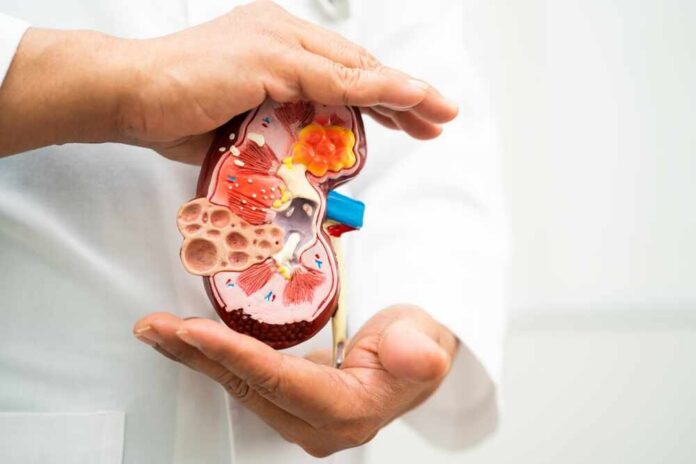
Ask someone with autosomal dominant polycystic kidney disease about treatment, and they will not start with lab numbers. They will tell you about living chained to a water bottle, planning every trip around a bathroom, and waking up several times a night to pee. That misery comes partly from the disease, and partly from its only proven disease-slowing drug, tolvaptan, which works by forcing the kidneys to dump water. For many patients, that trade feels brutal even if it adds years before dialysis.
Doctors have long focused on “hard” outcomes like kidney failure and transplant, while treating thirst, constant urination, and sleep loss as the price of admission. Mayo Clinic’s new work does not accept that bargain. Their team ran a phase 2 trial adding the gout drug probenecid to patients already on tolvaptan and reported about a 30 percent drop in urine volume on average, with people going from several nighttime trips to roughly one.[16] For quality of life, that is a giant swing.
How a gout drug exposed a second water-control switch in the kidney
For decades, textbooks said the hormone vasopressin was the main switch for water control in the kidney. The Mayo group has now described another path, driven by urate, the same molecule linked to gout.[16] They showed that urate can enter kidney cells, act as a signal, and move water channels called aquaporin 2 to the cell surface so the kidney can pull water back into the body without relying on vasopressin. That discovery alone could rewire how we think about fluid balance in kidney disease.
Probenecid, a drug first used in the 1940s, turns out to be a handy tool for that pathway. The United States Food and Drug Administration label describes it as a uricosuric drug that changes how the kidney handles uric acid, blocking its tubular reabsorption and boosting its excretion.[2] In the Mayo work, tweaking urate handling with probenecid helped reveal this second water-saving route. Then they went a step further and used the same drug clinically to tame the very water loss that tolvaptan kicks up. That kind of “old drug, new map” story is exactly why smart repurposing can move faster than inventing a new molecule from scratch.[21]
From mice to humans: early signals, real stakes, missing pieces
Hope in kidney medicine has burned people before, so the natural question is whether this is anything more than a comfort pill. In a mouse model of autosomal dominant polycystic kidney disease, probenecid did more than help with fluid balance. It blocked a channel called pannexin 1, cut harmful ATP release into cysts, slowed cyst growth, and improved filtration rates in male mice.[13] That is disease modification in an animal, not just symptom control, and it backs the idea that the drug might matter beyond bathroom breaks.
On the human side, though, the public record is still thin. The clinical trial listing for probenecid in hereditary polycystic kidney disease and related conditions states that the main goal is to reduce frequent urination related to tolvaptan, not to prove it delays kidney failure or shrinks cysts.[8] Mayo’s release calls the human work a “small clinical trial” and shares that 30 percent urine drop and better sleep, but does not yet show full data, randomization details, or long-term kidney outcomes.[16] For cautious doctors, and for anyone who values evidence over headlines, that is a big gap.
Why this old pill still deserves a real trial
Even with those warnings, dismissing probenecid outright would miss the pattern unfolding in kidney care. Drug repurposing has become a workhorse in chronic kidney disease because it is cheaper and faster than building new therapies, yet most repurposed ideas fail once tested in large human trials.[21] That is exactly why solid phase 2 and phase 3 data matter so much. If Mayo and others can release full protocols, imaging results, and longer follow-up, everyone will be able to judge whether this 80-year-old drug is window dressing or a real tool.
The bar is high. New compounds from top labs already show they can shrink cysts and restore kidney function in mice with autosomal dominant polycystic kidney disease.[17] Patients deserve treatments that not only let them sleep but also delay dialysis. The right path forward is not hype or fear, but clear-eyed testing: larger trials, hard kidney endpoints, and honest reporting of both benefits and harms. Until then, probenecid is best seen as a clever clue and a hopeful option under study, not yet a new standard of care.
Sources:
[2] Web – probenecid – Liv Hospital
[8] Web – A 1940s-era drug helped uncover a second kidney pathway for …
[10] Web – [PDF] CLINICAL PRACTICE GUIDELINES FOR MANAGEMENT OF GOUT
[13] Web – Probenecid (PB) to Treat Hereditary Nephrogenic Diabetes …
[16] Web – Can we further enrich autosomal dominant polycystic kidney …
[17] Web – Researchers identify new kidney pathway with help from 1940s-era …
[21] Web – Chronic Kidney Disease Pipeline Drugs Insights Report – DelveInsight