Millions of Americans with untreated sleep apnea face a higher risk of stroke, heart failure and death, according to decades of medical research, even as newer studies show the most common treatment doesn’t always prevent heart attacks.
Story Snapshot
- Major medical guidelines link untreated obstructive sleep apnea (OSA) to stroke, high blood pressure, heart failure and higher death rates.
- A landmark New England Journal of Medicine study found OSA raises stroke or death risk no matter what other health problems a person has.
- Younger adults with OSA face nearly double the five-year risk of cardiovascular events compared to people without it.
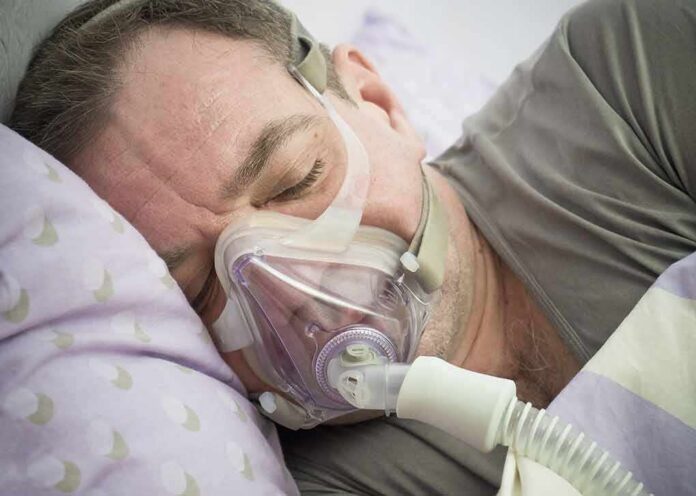
- Newer randomized trials show CPAP machines don’t always cut heart attack or stroke risk, unless patients use them consistently.
What The Core Research Shows
Obstructive sleep apnea happens when a person’s airway gets blocked repeatedly during sleep, cutting off oxygen for seconds at a time. The 2015 Clinical Practice Guideline for the Treatment of Obstructive Sleep Apnea and Snoring states plainly that untreated OSA is tied to high blood pressure, coronary artery disease, stroke, irregular heartbeat, car crashes, heart failure, daytime sleepiness and higher death rates.
A 2005 study in the New England Journal of Medicine followed patients over time and found OSA significantly increases the risk of stroke or death from any cause. That risk held up even after researchers accounted for other factors like high blood pressure, meaning OSA itself appears to add danger on top of existing health problems.
Severity Matters For Heart And Stroke Risk
Not every case carries the same weight. A 2018 study in the journal Stroke found that elderly patients with untreated severe OSA had a higher chance of stroke, though not necessarily coronary heart disease. Other research tracking patients for just over ten years found untreated severe OSA nearly tripled the odds of a fatal cardiovascular event compared with people who had no sleep apnea at all.
Age doesn’t protect younger patients either. A 2024 study in the Journal of the American Heart Association found that among adults 50 or younger diagnosed with OSA, nearly 32% had a cardiovascular event within five years, compared to just 16.5% of similar people without OSA. High blood pressure and diabetes drove much of that added risk.
Blood Pressure And Treatment Findings
Untreated OSA also appears to set the stage for new cases of high blood pressure. One long-term study found that people with untreated OSA were more likely to develop high blood pressure over time, while those who stuck with CPAP therapy for years saw that risk drop. The American Academy of Sleep Medicine goes further, calling OSA a “potentially lethal disease” tied to cardiovascular disease risk.
The same academy’s diagnostic guideline adds that OSA can hurt a person’s focus, memory and quality of life, on top of raising the odds of hard-to-control blood pressure, heart failure, irregular heartbeat and stroke. These are not fringe claims. They come from the professional body that sets national standards for sleep medicine.
What Treatment Trials Add To The Picture
A fuller picture emerges when researchers test whether treating OSA actually prevents heart attacks and strokes, not just symptoms. Several randomized trials of CPAP therapy found no significant drop in major cardiovascular events among people assigned to use the machines, compared to those who got usual care. One trial tracking patients for nearly four years found event rates of 17% in the CPAP group versus 15.4% without it, a difference that wasn’t statistically meaningful.
The catch is adherence. Patients who actually used CPAP consistently, at least four hours a night, showed notably lower rates of major cardiovascular events in several reanalyses. Fewer than half of patients in some trials manage that level of use, which may help explain why overall trial results and real-world outcomes don’t always line up.
Why This Matters For Everyday Patients
The research adds up to a real but nuanced warning. Untreated OSA, especially moderate to severe cases, is clearly linked to serious health dangers including stroke, heart disease and death. Whether strapping on a CPAP machine each night guarantees protection from a heart attack is a separate, less settled question that depends heavily on how consistently a person actually uses it.
For patients and families already juggling the cost and hassle of sleep studies, machines and follow-up visits, that distinction matters. The danger of ignoring OSA is well documented. The promise that treatment alone erases that danger still depends largely on whether someone can stick with it night after night.
Sources:
wellness.com, nejm.org, pmc.ncbi.nlm.nih.gov, ahajournals.org, aasm.org